.svg)
%201.svg)
Whole Exome Sequencing: Accelerating Precision Diagnostics with Variant Stores and Multimodal Data
%20(1).svg)

May 15, 2026
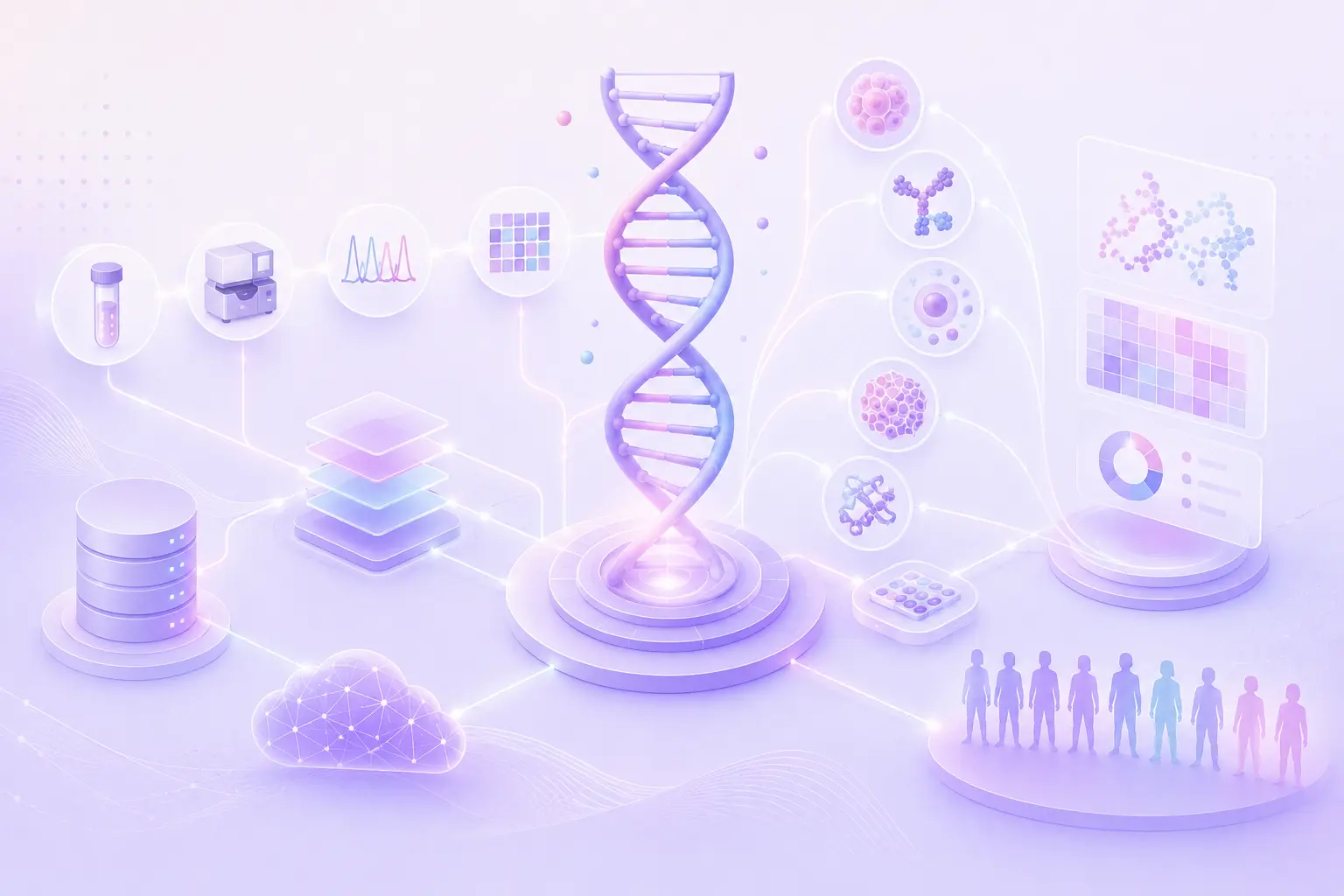
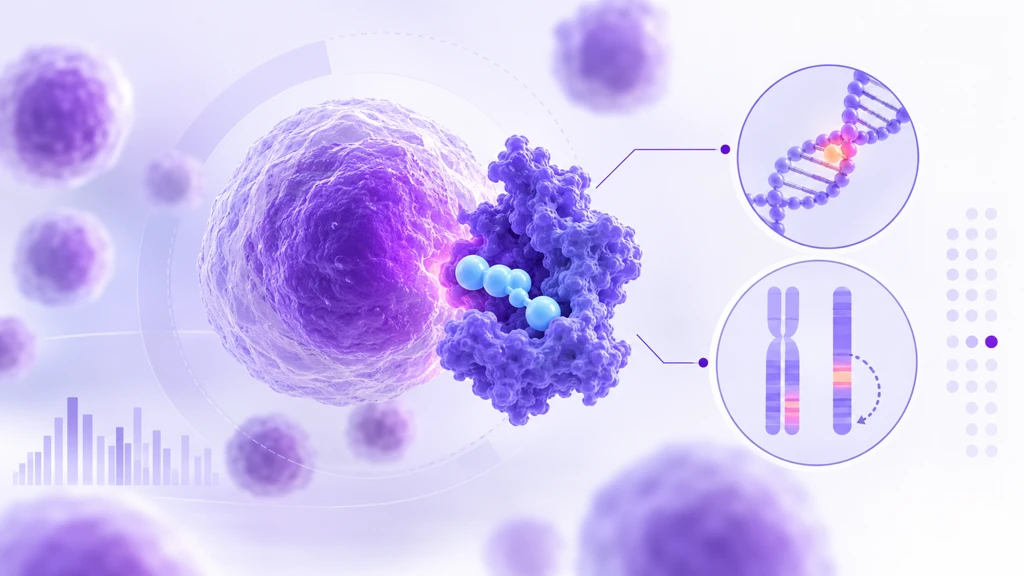
Despite rapid advances in sequencing technologies, identifying clinically meaningful genomic variants remains a major challenge in translational research. While the human genome contains roughly 3 billion base pairs, the vast majority is non-coding. The exome(protein coding region in DNA) accounts for just 1–2% of that sequence, yet harbours an estimated 85% of disease-causing mutations. Whole Exome Sequencing (WES) selectively captures and sequences these protein-coding regions, giving researchers a high-resolution view of the variants most likely to affect biology.
This targeted approach offers a practical middle ground: far more cost-effective than whole genome sequencing, and relevant as multi-modal biomedical datasets grow more complex.
The typical WES workflow includes:
WES remains widely adopted across research and clinical workflows because it balances scalability, interpretability, and sequencing efficiency.
Modern biomedical research increasingly depends on integrating genomic information with additional biological and clinical modalities.
While WES provides valuable insights into coding-region variation, researchers often need to contextualize these findings using complementary datasets such as , Clinical data, Imaging data, Proteomics, Transcriptimics, Single-cell-seq, Spatial Transcriptomics data, Functional screening data.
Integrating these modalities enables more comprehensive biological interpretation and supports stronger translational hypotheses. To support these multimodal research environments, Elucidata works across 30+ biomedical data modalities within its data infrastructure and integration frameworks, with WES serving as one of the core genomics modalities.
As legacy cloud repositories retire, the industry is shifting toward scalable, structured ecosystems. The goal is no longer just storing data, but operationalizing it.
Variant stores are emerging as a critical solution for managing Whole Exome Sequencing (WES) data. Since WES focuses on protein-coding regions where a large proportion of clinically relevant mutations occur, it generates highly valuable variant datasets that require scalable indexing, annotation, querying, and interpretation workflows.
By integrating variants (mutated parts of genome) with rich annotation layers(disease knowledge), organizations can drive high-value initiatives :
To support this shift, Elucidata has been building scalable genomics and multimodal data platforms with biopharma companies for faster querying and analysis of large-scale biomedical data. By integrating variant stores with clinical and biological annotation layers, these systems help researchers study genetic risk profiles, disease associations, and patient subgroups more efficiently. This enables biopharma teams to derive clinically relevant insights faster and support precision diagnostics and translational research. Connect with our team to explore our solution frameworks.


.svg)
.svg)


%201%20(1).svg)


%201%20(1).svg)




%20(1).svg)





.svg)
%20(1).svg)


