From 20,000 genes to 2 targets
Your program should invest in
We build program-specific AI solutions that help Biopharma R&D teams identify targets they can confidently pursue.
.webp)




.webp)

.webp)


.webp)

.webp)


We harmonize multi-modal R&D data across proprietary and public sources, delivering quality-checked data products
%201%20(1).svg)
We leverage multi-omics analysis - to enable research teams to understand underlying biology and drive more informed decisions across the drug discovery process.
We build scalable data infrastructure that helps researchers answer key questions across target discovery, reverse translation, and biomarker identification.
%20(1).svg)
%20(1).svg)
%201.svg)
Teams need to evaluate 10–20 competing targets simultaneously across modalities, with no reliable framework.
%20(1).svg)
Teams rely on anecdotal evidence and gut instinct to decide which 5–10 targets move into validation.
%20(1).svg)
Teams evaluate candidates against different biological contexts, with no framework to rank them against each other.
%20(1).svg)
Wrong target in validation mean 18 months and upwards of $2M committed to the wrong bet. This is a resource allocation mistake at the program-level
You bring your differentiated therapeutic thesis and proprietary data. Elucidata co-builds a program-specific target decision system that connects evidence & surfaces targets your team can act on.
We harmonize your proprietary omics, assay, and experimental data, connect it to curated evidence from 20+ public sources, and run quality checks before it enters the graph, turning 20,000 genes into an evidence-linked target landscape.
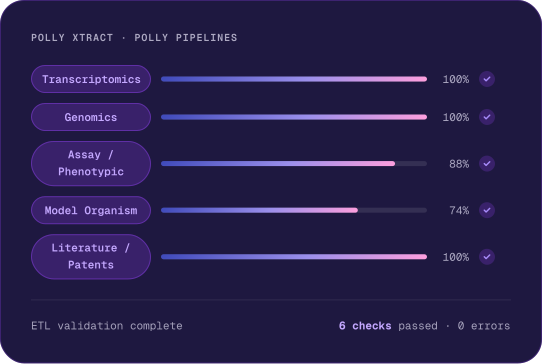
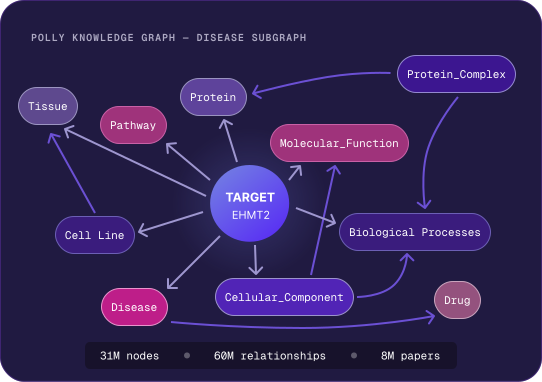
The knowledge graph is built around your program context and not just a broad disease label. It connects evidence across genetics, transcriptomics, proteomics, and disease mechanisms for every target, and helps filter generic associations into program-relevant targets.
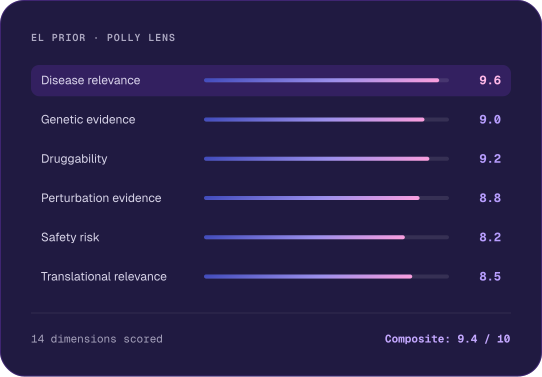
Each target is ranked using a custom scoring framework aligned to your differentiated therapeutic thesis. Our in-silico perturbation model stress-tests hits across unscreened, disease-relevant contexts to show which signals are likely to hold up.
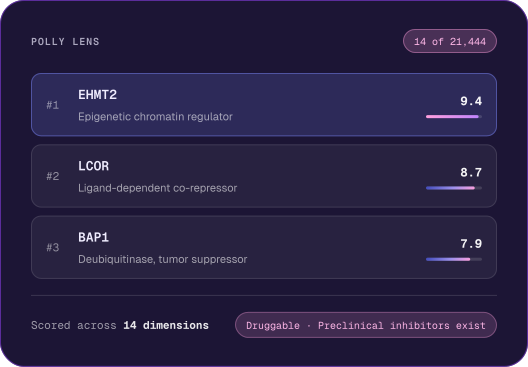
Your team gets a Target Dashboard with evidence grades for each target across genetics, multi-modal omics, disease biology, druggability, and confidence level. Every ranked candidate includes mechanistic rationale and source-linked evidence, helping your team decide which 2 targets are worth investing in.
Polly ingests your proprietary data and public biomedical evidence, connects it through a knowledge graph, scores candidates across 14 dimensions, and delivers a ranked, decision-ready target list your team can defend.
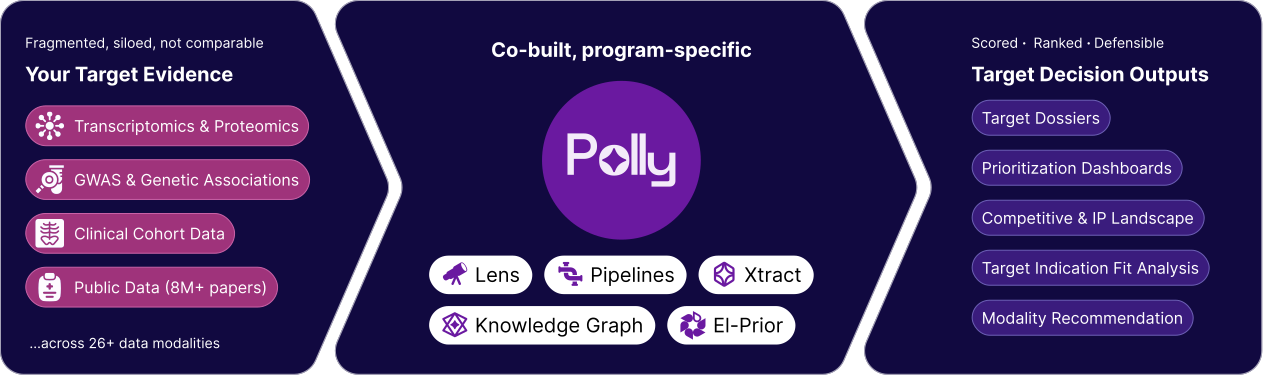
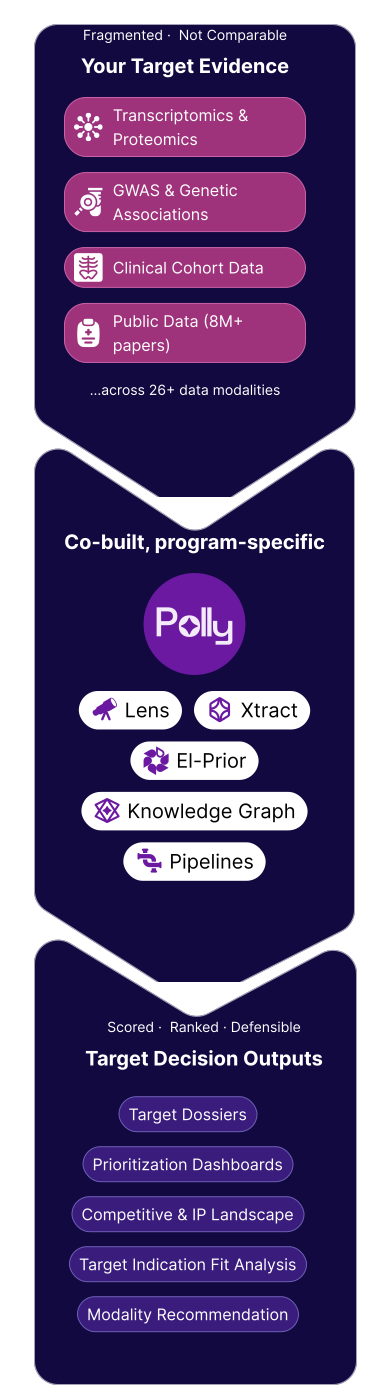
LLMs summarize papers. Generic AI Tools surface associations. We build knowledge graphs & models that show the mechanistic trail behind every target recommendation.

A Massachusetts-based therapeutics company sought to accelerate AML target-indication assessment using differentiation therapy, a novel approach that transforms malignant cells into healthy functional ones.

A Boston-based biotech focused on immune and metabolic diseases was hampered by siloed non-model datasets; our scalable ETL pipeline and Base-KG unified them into one AI-ready foundation from day one.

In collaboration with Elucidata, a US-based therapeutics company identified a novel Acute Myeloid Leukemia target in just 6 months. It has advanced to clinical trials, offering hope to 100k+ patients.

A pharmaceutical company based in Boston aimed to speed up their target discovery and validation process for inflammatory disease using single-cell RNA-seq data.

.svg)

.svg)


.svg)
%201%20(1).svg)
%20(1).svg)
%201%20(1).svg)
.svg)