.svg)
%201.svg)
Advancing Precision Medicine in Complex Diseases by AI-driven Disease Subtyping
%20(1).svg)

May 13, 2026
.png)
A medical diagnosis is rarely the whole story. For decades, broad labels like "lung cancer" or "autoimmune disorder" dictated standard, one-size-fits-all treatments regardless of the unique biological mechanisms at play.
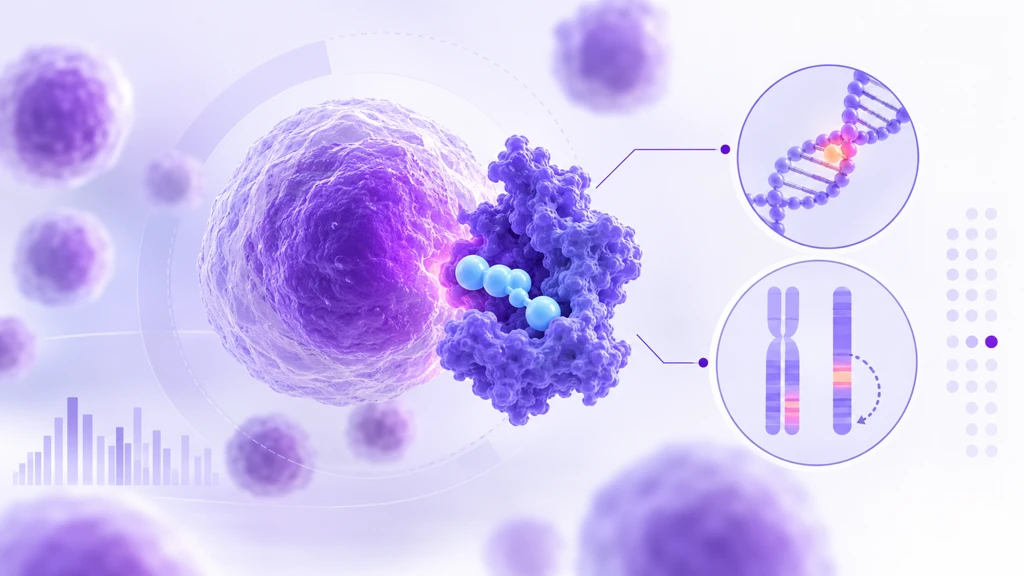
Research is now driving a shift toward precision medicine through disease subtyping. By looking past surface-level symptoms and defining the shared underlying biology of a condition, researchers are stratifying patients and slicing broad disease labels into highly specific, molecularly distinct subgroups.
The ultimate goal for the industry is - to ensure that the targeted therapies they develop are the exact right treatments for a patient's unique biology, right from day one. For example, Moving from a broad "breast cancer" diagnosis to identifying a HER2-positive subtype directly triggers the use of the drug trastuzumab.
We approach this by using Elucidata’s LLM-powered platform, Polly, to harmonize multi-omics profiles with real-world evidence (RWE) and help researchers bridge the gap between clinical phenotypes and molecular data to achieve the precise patient stratification needed for highly targeted therapies.
To discover clinically actionable subtypes, R&D teams must find the hidden links between a patient’s molecular profile (omics data) and Real-World Evidence (like Electronic Health Records and clinical notes). Unfortunately, integrating this data presents severe roadblocks-
To accelerate biomarker discovery and patient stratification at scale, our approach is to shift from manual ETL pipelines to LLM-assisted harmonization
A preclinical R&D team needed to de-risk their oncology programs by integrating Real-World Data (RWD) with Public Omics Data (TCGA) in under 4 months.
Using Polly platform, millions of RWD records were mapped to our extended OMOP model in just 4 weeks. By establishing linkage anchors based on age bins and disease ICD codes, the team built a unified feature matrix and applied unsupervised clustering to the data.
The Outcome- The pipeline successfully uncovered 4 distinct, molecularly informed lung cancer phenotypes.
While these patients looked identical based on standard EHR billing codes, the integrated omics data revealed drastically different survival trajectories:
Patients in the worst-prognosis subgroup survived, on average, less than one-third as long as those in the best-prognosis group yet standard clinical coding treated them identically. Without LLM-assisted harmonization linking the molecular layer to real-world outcomes, these subtypes would have remained entirely hidden.
When R&D teams can reliably stratify patients by molecular subtype early in the pipeline, the implications go far beyond a single study:
We are moving toward a future where a diagnosis is no longer just a label, but a precise molecular map. The combination of multi-omics research and AI-driven subtyping is already reshaping precision medicine; the only question is whether your team has the tools to do it fast enough to matter. For patients waiting on a treatment that actually matches their biology, every day counts.
Elucidata's Polly platform combines LLM-powered data harmonization with extended OMOP modeling and accelerates biomarker discovery and patient stratification. Get in touch with us to learn more and overcome the data bottlenecks in precision oncology and your complex disease research.


.svg)
.svg)


%201%20(1).svg)


%201%20(1).svg)



%20(1).svg)




.svg)
%20(1).svg)


