.svg)
%201.svg)
Polly Atlas- Structured Repository for Multi-modal Biomedical Data
%20(1).svg)

March 17, 2026
.webp)
Biomedical R&D organizations generate massive volumes of data every everyday which ranges from high-throughput omics to longitudinal clinical trials and patient records. Managing and utilizing this data effectively is essential for developing new therapies, driving scientific research and innovations, and enabling faster biomarker discovery.
Despite massive investments in computational biology and AI-driven analytics, research teams still face a fundamental challenge: their data remains fragmented.
Experimental records are scattered across spreadsheets, PDFs, local cloud drives, and team-specific repositories. As projects scale, these disconnected datasets create inconsistencies in metadata, naming conventions, and experimental documentation, making information increasingly difficult to trace, compare, and reuse.
In fast-moving drug discovery environments, this problem extends far beyond storage. Researchers frequently spend more time locating, cleaning, and harmonizing data than generating scientific insight from it.
Our data harmonization infrastructure, Polly Atlas was designed to solve this problem by helping biomedical organizations transform fragmented research datasets into structured, searchable, and AI-ready repositories.
In a typical drug discovery program, multiple research groups run parallel experiments across different cell lines, compounds, assays, and timelines. As these operations scale, even small inconsistencies in how data is recorded can create significant operational bottlenecks.
Different teams may use different names for the same cell line or small molecule. Metadata structures can vary between projects, and historical assay records may become difficult to trace months or even years later. Over time, researchers are forced to spend increasing amounts of effort searching, cleaning, and manually harmonizing datasets before meaningful analysis can even begin.
Traditional research infrastructure struggles to keep pace with this complexity. Teams are often forced to choose between the flexibility of spreadsheets and the rigid structure of conventional databases, neither of which is designed for the highly iterative and non-linear nature of biomedical R&D.
As a result, valuable experimental data becomes isolated across disconnected systems, limiting discoverability, slowing cross-experiment analysis, and reducing the long-term usability of historical records.
Modern AI and machine learning workflows only amplify this challenge. Without structured and connected infrastructure, even high-quality datasets become difficult to operationalize at scale.
A precision oncology company developing next-generation cancer therapies was struggling to manage high-throughput drug screening data. Their teams were continuously generating large volumes of cell viability assay data from 96-well and 384-well screening plates, including raw counts, processed IC50 curves, comparative analyses, and longitudinal experimental records.
Because the data lived across fragmented spreadsheets and cloud folders, answering basic scientific questions became an ordeal. Finding out how a specific compound performed across different experiments or tracking how resistance signatures changed over time required manual, error-prone data scavenging.
The process slowed analysis workflows considerably and introduced significant operational overhead into the discovery pipeline.
To address these challenges, the company implemented Polly Atlas to standardize, harmonize, and centralize its experimental data workflows.
Automated ingestion pipelines replaced manual data handling processes, while standardized ontologies and harmonized metadata created consistency across projects, compounds, assays, and cell lines. Instead of navigating disconnected spreadsheets and isolated repositories, researchers could now retrieve historical and ongoing experimental data through a unified search environment.
The operational impact was immediate.
Workflows that previously required an entire day of manual data cleaning and reconciliation could now be completed within minutes. Historical datasets became FAIR - Findable, Accessible, Interoperable, and Reusable which significantly improved long-term accessibility and enabling more efficient cross-experiment analysis.
Researchers were also able to query compounds, assay data, and therapeutic response patterns across millions of records with far greater speed and accuracy. What was once fragmented experimental documentation evolved into a connected and reusable research infrastructure that could support ongoing discovery workflows at scale.
The transformation extended beyond operational efficiency. By improving data discoverability and reducing manual harmonization efforts, research teams were able to spend less time managing datasets and more time generating scientific insight.
In another deployment, an organization working with large-scale biobank data digitized and integrated clinical metadata from EMRs and PDF-based records into a queryable Atlas environment. By creating a unified and searchable view of patient and sample information, research teams improved both sample discoverability and longitudinal traceability across projects.
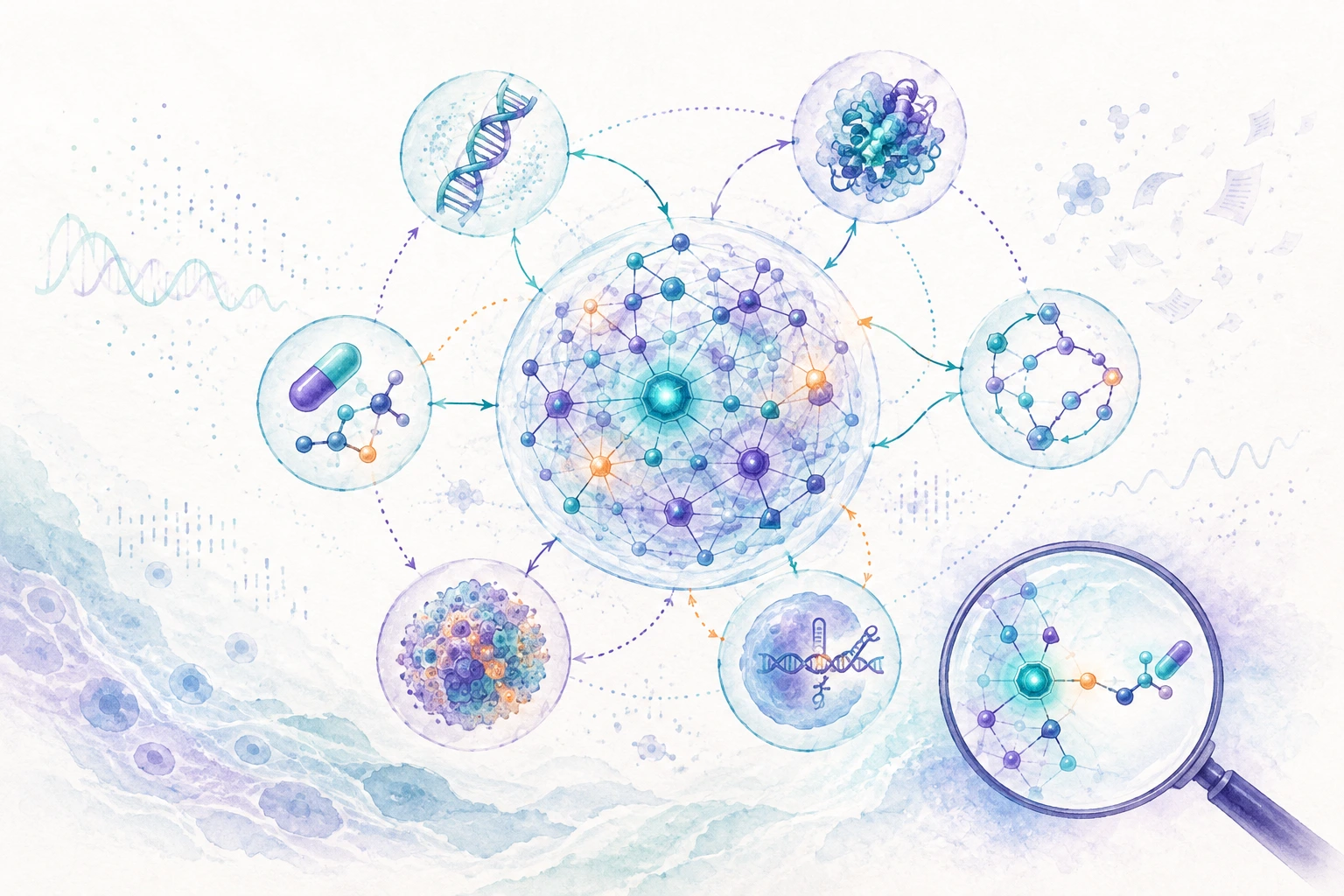
These implementations demonstrate how structured data infrastructure can help organizations move beyond isolated datasets toward connected and reusable research ecosystems.
Researchers can efficiently query complex datasets across millions of records, explore longitudinal patient journeys, and accelerate downstream biomarker discovery workflows without repeatedly restructuring data for every new analysis.
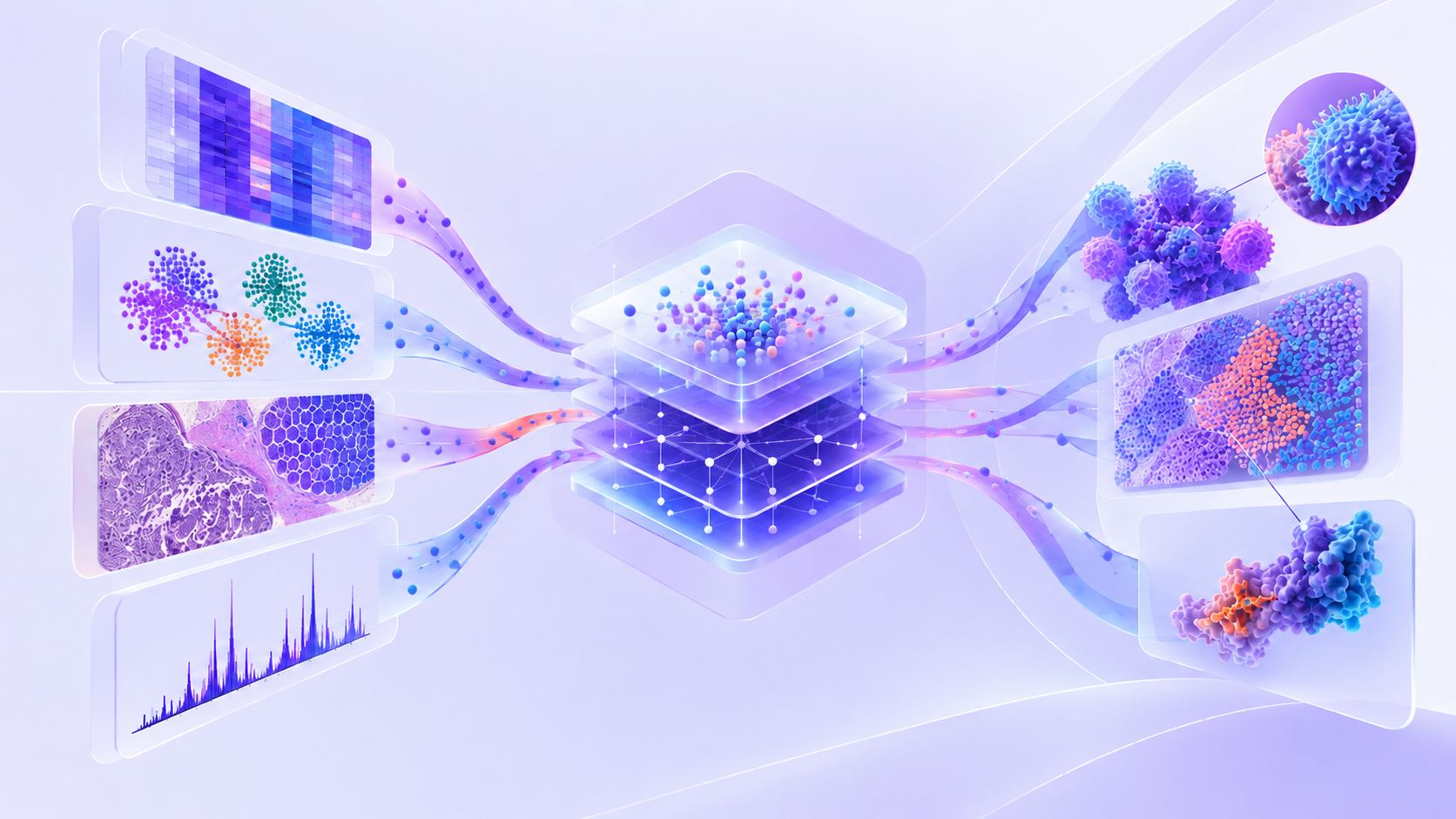
The efficiency of Polly Atlas is supported by an end-to-end pipeline that handles data preparation from ingestion to analysis: This workflow begins with Multi-Modal Data Ingestion, which accommodates diverse sources including Omics, Clinical, Patient, Imaging, and Non-Omics Assay data. Next, an LLM-Powered Harmonization Engine utilizes an automated framework for data processing, metadata curation, and quality checks to ensure data integrity. The processed data is then intelligently structured into an Analysis Data Model stored on the Polly platform for reliable access, and finally, it supports Custom Visualization by allowing the direct export of harmonized data into custom dashboards for clear exploration.
Organizations implementing Polly Atlas have reported measurable improvements in their workflow efficiency. By replacing manual workflows with automated harmonization pipelines, research teams have achieved a 7X faster time to analysis, allowing them to pivot from data preparation to scientific insight almost immediately. This accelerated data velocity has a direct impact on early-stage discovery, enabling a 75% faster matching of indications to targets and significantly de-risking the therapeutic pipeline.
Furthermore, the platform fundamentally alters resource allocation by saving over 1,000 hours of manual data wrangling per project, freeing highly skilled scientists from spreadsheet maintenance so they can focus on core research. To date, this structured approach has enabled the successful delivery of more than 200 multi-modal data products to Biopharma partners, proving that a connected data infrastructure is a critical asset for scalable, collaborative drug discovery.
The platform accommodates diverse modalities including omics datasets, imaging records, clinical data, assay outputs, patient metadata, and longitudinal research datasets, with support for integrating more than 30 biomedical data modalities. Once ingested, the data passes through automated harmonization and curation workflows that normalize metadata, standardize ontologies, validate data quality, and establish structured relationships across experiments.
This enables researchers to:
As biomedical datasets continue to expand in size and complexity, scalable data infrastructure is becoming a foundational requirement for modern life sciences organizations. The future of precision medicine and AI-driven discovery will depend not simply on generating more data, but on making that data structured, connected, and reusable across the research lifecycle.
Organizations that can efficiently harmonize and operationalize their data will be better positioned to accelerate therapeutic discovery, improve translational research workflows, and generate clinically meaningful insights faster.
Polly Atlas helps enable that transition by transforming fragmented biomedical assets into structured, searchable, and AI-ready research infrastructure that supports faster scientific decision-making and scalable discovery operations.
This is no longer just a data management challenge. It is becoming a defining factor in how quickly modern biomedical organizations can move from raw experimental data to actionable scientific insight.


.svg)
.svg)


%201%20(1).svg)


%201%20(1).svg)

%20(1).svg)




.svg)
%20(1).svg)


