.svg)
%201.svg)
How In Silico Perturbation Prediction Can Help De-Risk Target Discovery
%20(1).svg)

April 30, 2026
.png)
In drug discovery, every program begins with a foundational decision - which target to pursue. This choice determines downstream experiments, screening strategies, and ultimately some $2M+ investment. Identifying a set of genes 500 differentially expressed genes (DEGs) is simple; however, predicting which of those 500 will successfully modulate disease without triggering adverse toxicities is where most programs fail.
Most researchers and computational biology teams make this decision based on fragmented evidence operating on - rare diseases, underrepresented patient populations, and non-standard modalities. You are expected to narrow a starting universe of 20,000 genes down to a single definitive hypothesis using genetics, omics signals, and literature associations that do not fully capture how a biological system will actually respond to intervention.
What if we could predict how a system reacts before running a single wet-lab experiment? How can we screen our lead targets in-silico to flag toxic liabilities and mechanistic failures early in the program?
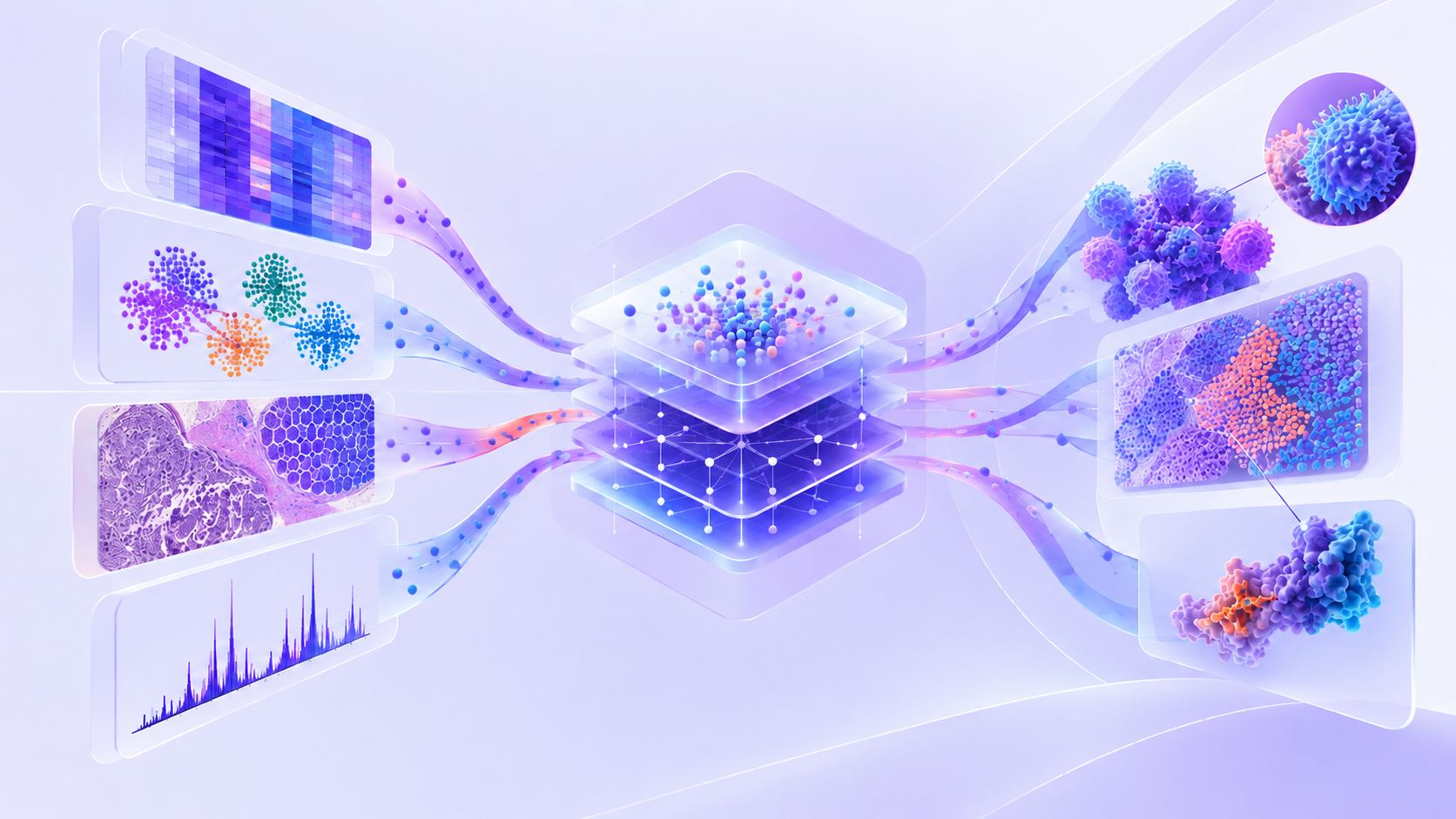
The fundamental shift is here: Elucidata's El-Perturb and co-built knowledge graphs allows R&D teams to move this validation layer in-silico. By predicting the mechanistic impact of an intervention early, we identify true causal drivers from correlations and help teams confidently prioritize the right therapeutic targets before committing to expensive multi-year screening campaign.
Target identification operates under conditions that are inherently difficult: a massive search space, fragmented data, and limited experimental validation bandwidth. Despite advancements, the failure rate in clinical trials due to poor target selection remains stagnant -
Fragmented multi-omics datasets: Multi omics data- transcriptomics, genomics, proteomics exist across multiple formats and species contexts with no shared metadata structure.
Disconnected Internal data: Teams generate valuable data like patient samples, animal models, proprietary assays but it rarely feeds into target decisions. The don’t have the infrastructure to integrate it with public data while preserving biological context.
The Correlation Trap: Standard bioinformatics pipelines excel at finding genes that correlate with a disease state but struggle to distinguish causal "drivers" from passenger gene. They show links to disease, but not what happens when a gene is actually perturbed.
Out-of-distribution biology- To bypass wet-lab costs- models need to be trained on the right biological context. In rare diseases or novel modalities, critical signals are often hidden in noisy data (OOD Data ). General AI built for scale struggle to extract reliable patterns in these settings.
Our approach combines deep data integration with perturbation-aware modeling-
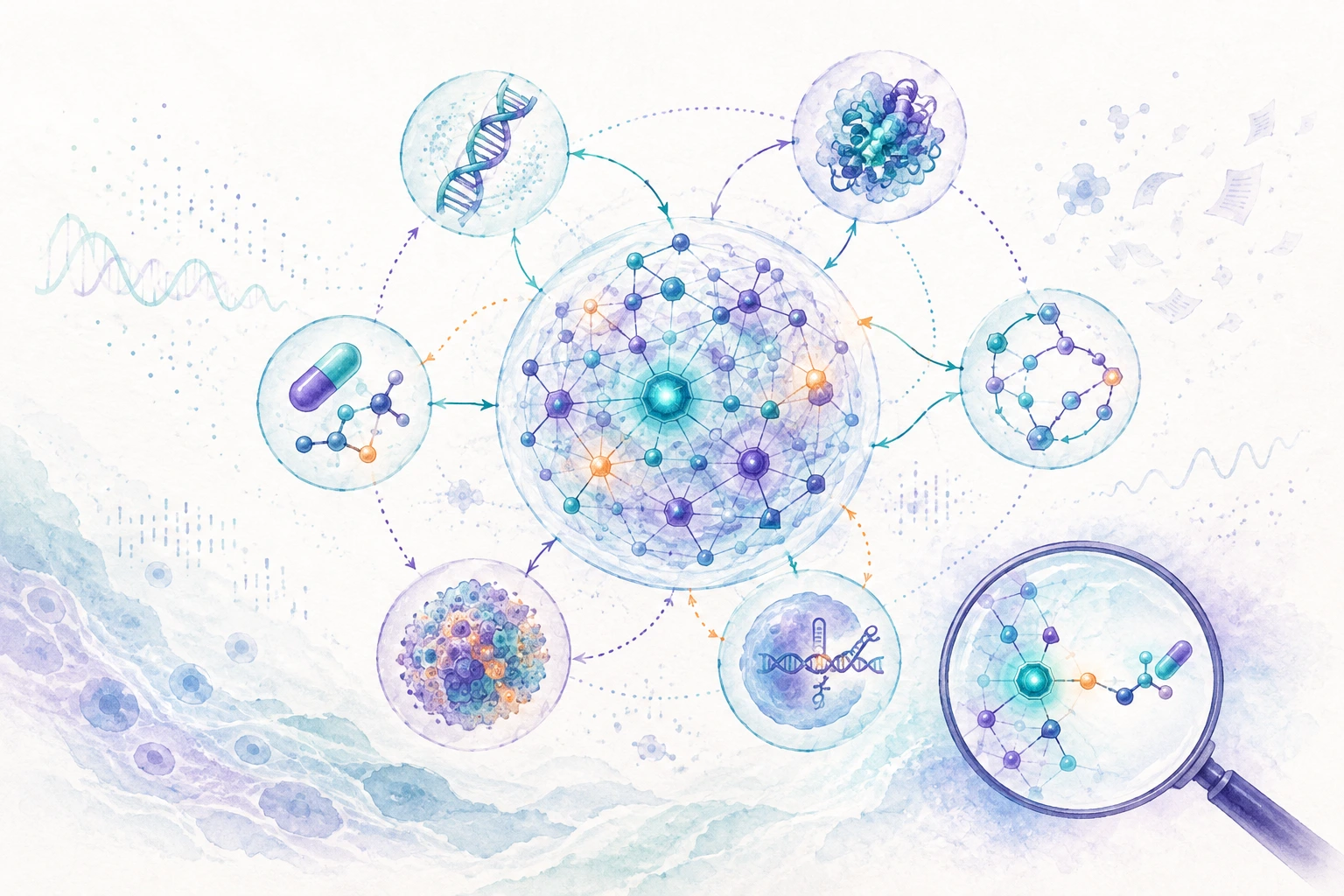
The first step is structuring the biological evidence to narrow the search space. We build a custom Knowledge Graph (KG) centered entirely on your specific biological question.
Unlike generic, off-the-shelf systems, we integrate your proprietary data with expertly curated public modalities - including non-standard data types like comparative genomics.
Knowledge Graph captures critical context such as cell type, modality, and mechanism of action, resulting in a ranked list of ~20 putative targets.
Polly Lens generates deep, multi-modal evidence reports for every target-indication-modality pair. It traces predictions back to the raw data, ensuring a transparent view of the biological reasoning.
Polly Lens digs into the evidence, links it to raw data, and produces actionable insights for any specific query needed for hypothesis like- gene, disease, etc.
Once a shortlist of 20 targets is identified, the question is: If we perturb this target, does the system respond in a therapeutically meaningful way?
This is where El-Perturb enters. Instead of relying on generalist cell lines, El-Perturb is custom-trained on rich patient data to accurately simulate how specific cell types will respond to an intervention.
All outputs are synthesized into a Target Prioritization Dashboard - an interactive, leadership-ready interface that brings together ranked targets, evidence reports, and decision support in one place, all in a no-code interface.
For an oncology program focusing on Acute Myeloid Leukemia (AML), our target ranking and co-build approach identified and validated a novel target that has successfully progressed to Phase 1 clinical trials.
Target identification is a mechanistic understanding problem. Reach out to the us today to discuss how El-Perturb can shift your mechanistic validation in-silico and turn target selection into a definitively engineered decision.


.svg)
.svg)


%201%20(1).svg)


%201%20(1).svg)



%20(1).svg)





.svg)
%20(1).svg)


