.svg)
%201.svg)
Where Is Vaccine Development Headed? From Faster Platforms to Smarter Discovery
%20(1).svg)

September 1, 2026
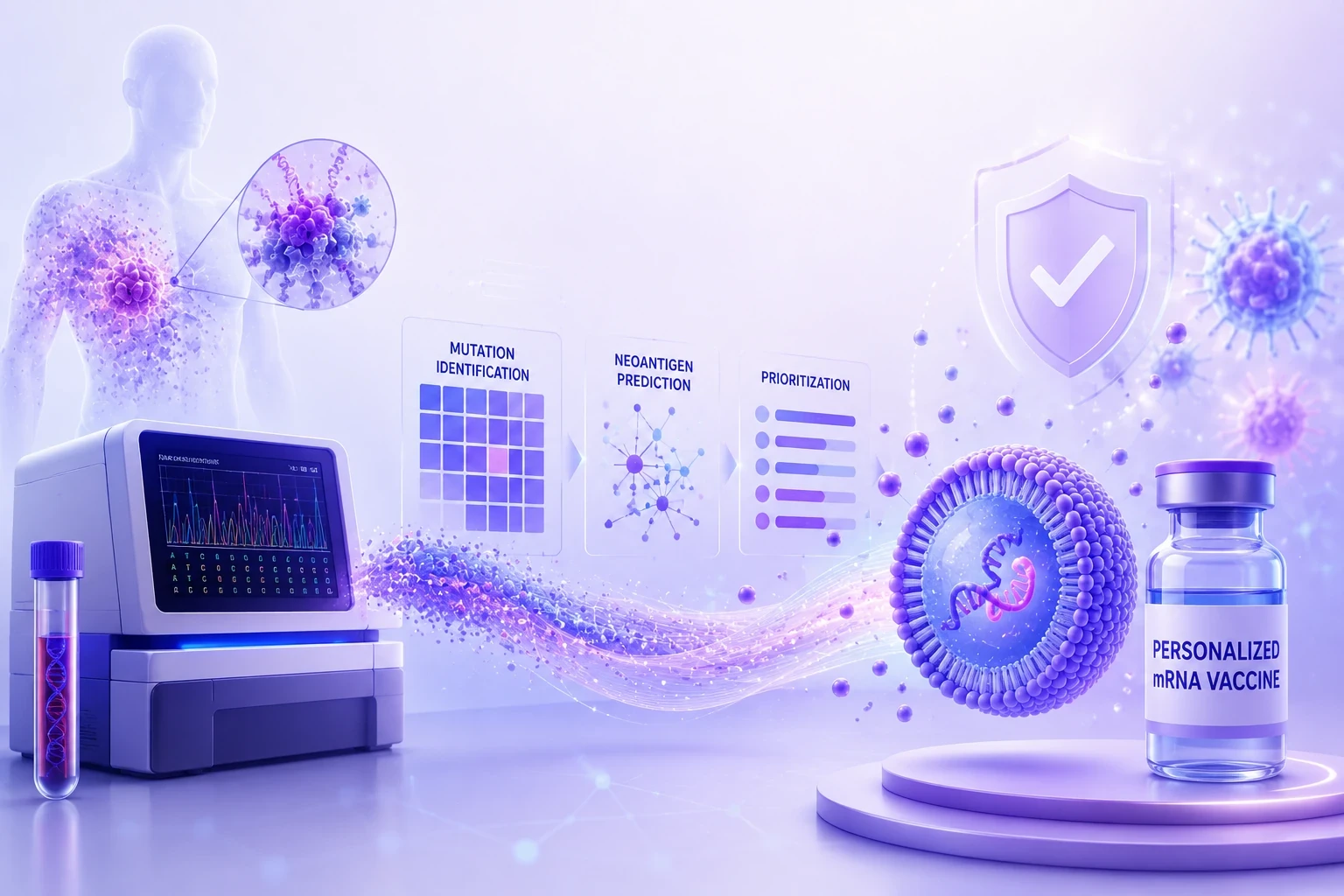
Each August, National Immunization Awareness Month offers a chance to reflect on how far vaccine science has come. But the more interesting vaccine story today is not about how quickly we can manufacture a shot. It is about how quickly we can figure out what the shot should target in the first place.
The recent Phase 3 success of Merck and Moderna's individualized neoantigen therapy offers a useful example. It also points to where the next bottleneck in vaccine development may lie: not in making vaccines faster, but in making better biological decisions earlier.
The COVID-19 pandemic showed how much time can be removed from vaccine development when the platform, target, funding, and manufacturing infrastructure are already in place. Now, a new generation of vaccines is presenting a harder problem: the target itself may need to be discovered for each patient, pathogen, or biological context.
People often say that COVID-19 vaccine development happened incredibly fast compared to the usual ten-year timeline. This can make it seem like important steps were skipped, but that is not true. What actually disappeared was unnecessary waiting time.
Six key things happened at the same time.
The platform and the target were already on the shelf. mRNA vaccine chemistry and lipid nanoparticle delivery had been under development for well over a decade before 2020, work recognized by the 2023 Nobel Prize in Physiology or Medicine awarded to Katalin Karikó and Drew Weissman. Separately, work on SARS and MERS had already established the coronavirus spike protein as the correct antigen and had solved the structural problem of stabilizing it in the right conformation, producing the two-proline design later used in COVID-19 vaccines. When the SARS-CoV-2 sequence was published in January 2020, developers were not choosing a target or building a platform. They were substituting a sequence into a system that already existed. The morning after the sequences were released, spike sequences had already been modified to include the prefusion stabilizing mutations and sent for synthesis, and clinical material reached animal studies 25 days later.
The different trial phases overlapped instead of happening one after another. Usually, phase 1 finishes, the data is reviewed, funding is raised, and then phase 2 starts. For COVID-19 vaccines, the phases ran at the same time or with very short gaps, in some cases overlapping with animal studies as well. Reviews still took place, but there was no waiting in between.
Manufacturing started before the vaccine was proven to work. Normally, companies do not build factories for a product that might fail in late trials. Programs like Operation Warp Speed took on that financial risk, so doses were made while trials were still running. When the trials showed the vaccine worked, distribution could start right away instead of waiting eighteen months.
Funding was provided all at once, instead of in stages. Governments, companies, and foundations committed billions of dollars before any results were available. Normally, a lot of time is spent raising money for each step, but this time, that delay was eliminated.
Regulators reviewed data as it came in, instead of waiting for a full submission. Under a rolling review, regulators assess evidence from ongoing studies as it becomes available rather than requiring a complete package up front. The amount of safety and effectiveness data needed stayed the same, but the waiting time before review was removed.
The pandemic itself sped up the results. This is often overlooked but is very important. Normally, a trial ends when enough people in the placebo group get sick, which can take years if the disease is rare. In late 2020, it only took weeks. Enrollment was also much faster than usual: the 30,420-participant Moderna efficacy trial delivered first injections between July 27 and October 23, 2020, because everyone was affected by the disease.
Looking at these factors, most of them removed financial and administrative delays. The ready-to-use platform and proven target reduced scientific delay. That achievement came from fifteen years of steady, behind-the-scenes work that did not seem fast at the time. The GAO put the compression at roughly an order of magnitude, from about ten years to about ten months.
Merck and Moderna have reported the first positive Phase 3 result for an individualized neoantigen therapy. Intismeran autogene (V940 / mRNA-4157) is a custom mRNA construct encoding up to 34 neoantigens drawn from the mutational profile of a single patient's tumor. In the Phase 3 INTerpath-001 trial, 1,137 patients with completely resected stage IIB-IV melanoma were randomized 2:1 to receive intismeran plus pembrolizumab or pembrolizumab alone. The combination met the primary endpoint of recurrence-free survival and the key secondary endpoint of distant metastasis-free survival, with no new safety signals. Full data have not yet been presented, so effect sizes remain undisclosed. The mechanism is complementary rather than additive: the mRNA component directs T cell responses toward tumor-specific mutations, while anti-PD-1 blockade keeps those T cells from being switched off in the tumor microenvironment. Five-year follow-up from the earlier Phase 2b KEYNOTE-942 study, presented at ASCO 2026, gives the durability signal that this readout now confirms in a registrational population: a 49 percent reduction in the risk of recurrence or death (HR 0.51) and a 59 percent reduction in the risk of distant metastasis or death (HR 0.411).
Vaccine development is moving past the standardized shot designed around a single pathogen. Several emerging approaches point toward a field that is more personalized, more adaptable, and more dependent on a working understanding of immune biology.
Personalized vaccines: The vaccine is designed around the patient. Personalized cancer vaccines use an individual's tumor mutations to identify neoantigens capable of triggering an immune response. Sequencing and target selection become part of the product itself, which is precisely what INTerpath-001 tested in a registrational population.
Broad-spectrum protection: Rather than targeting one pathogen or strain, researchers are exploring ways to prime the immune system against multiple threats, including approaches that stimulate broader innate responses and may offer coverage against pathogens never included in the formulation.
Mucosal immunity: Protection can move closer to where infection starts. Intranasal and inhaled vaccines aim to generate responses in the nose and respiratory tract, with the goal of blocking infection and transmission rather than only reducing severe disease.
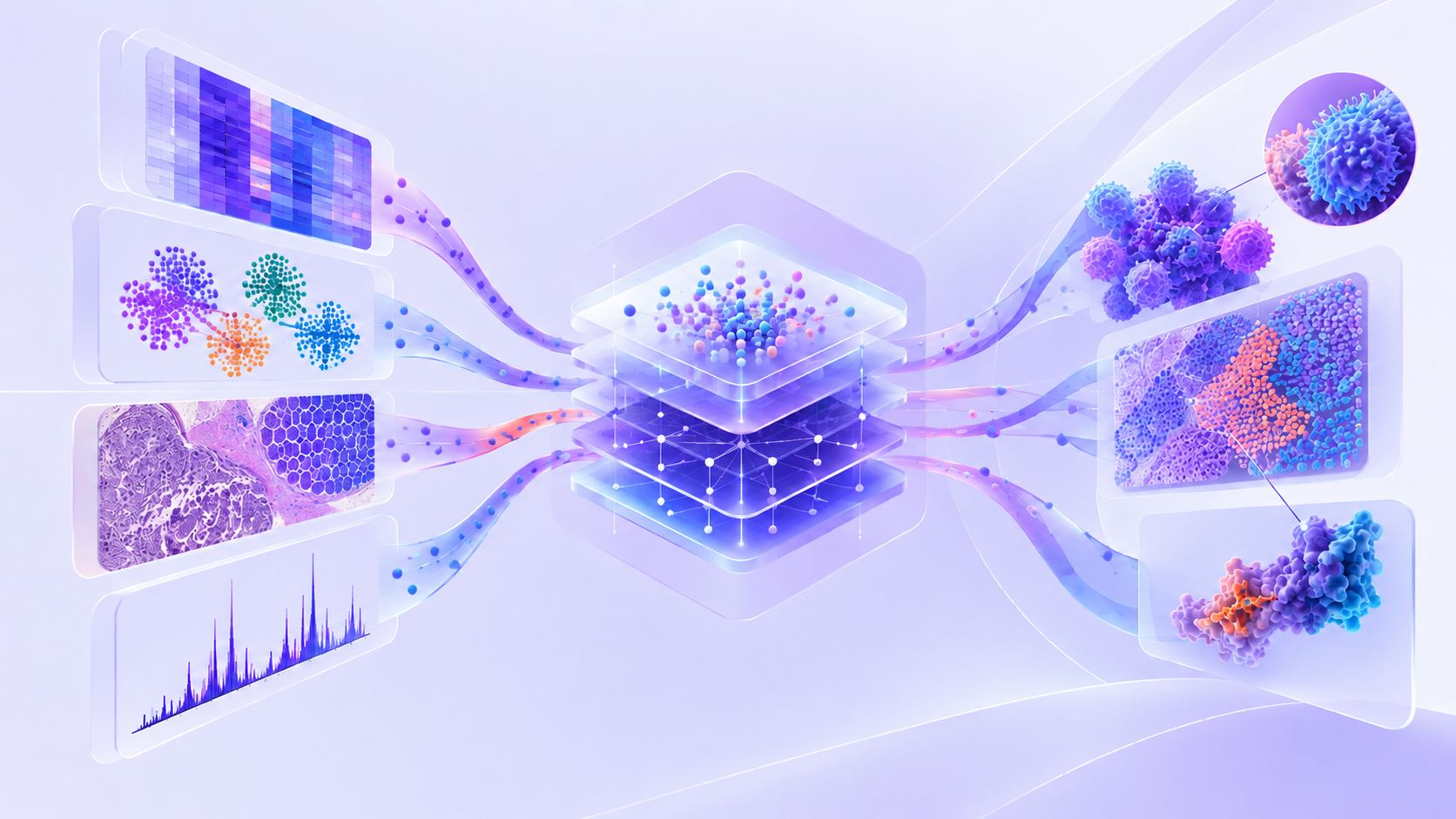
AI-assisted discovery: As the space of possible antigens and neoantigens expands, computational methods can narrow the field. Models can integrate genomic, structural, immunological, and clinical data to predict which targets are likely to produce a meaningful response. The difficulty lies in grounding those predictions in reliable biological evidence. Current pipelines still carry high false-positive rates and lack a gold standard for validation. In one Phase 1 pancreatic cancer trial, only 25 of 230 computationally prioritized neoepitopes across 16 patients produced a detectable T cell response.
Next-generation RNA platforms: mRNA demonstrated how quickly a platform can be adapted. The next generation, including self-amplifying RNA, is focused on stability, delivery, durability, and dose efficiency, with the goal of making platforms faster to adapt across diseases. The first approved self-amplifying RNA vaccine, Kostaive, is given at a fraction of the dose of a conventional mRNA vaccine.
The five approaches above share one problem. None of them rest on a single, well-characterized antigen. Success depends on biology that varies by patient or by pathogen, which moves the hardest part of the work from the clinic into discovery. When the antigen or target choice is wrong, the failure surfaces after years of effort rather than weeks. INTerpath-001 illustrates the exposure precisely: those three and a half years between mid-stage signal and Phase 3 confirmation were spent testing a selection method, with the platform never in question.
This is a data problem before it is a science problem. The evidence required, genomic, transcriptomic, proteomic, and clinical, arrives from different labs, different systems, and incompatible vocabularies. The constraint is rarely volume. It is the cost of making disparate evidence answer one question.
COVID-19 demonstrated that funding and administrative delay can be erased given sufficient will. What remains is validation, meaning the work of building confidence in a candidate before committing to expensive next steps. No amount of computational power resolves that without evidence that can be trusted and traced.
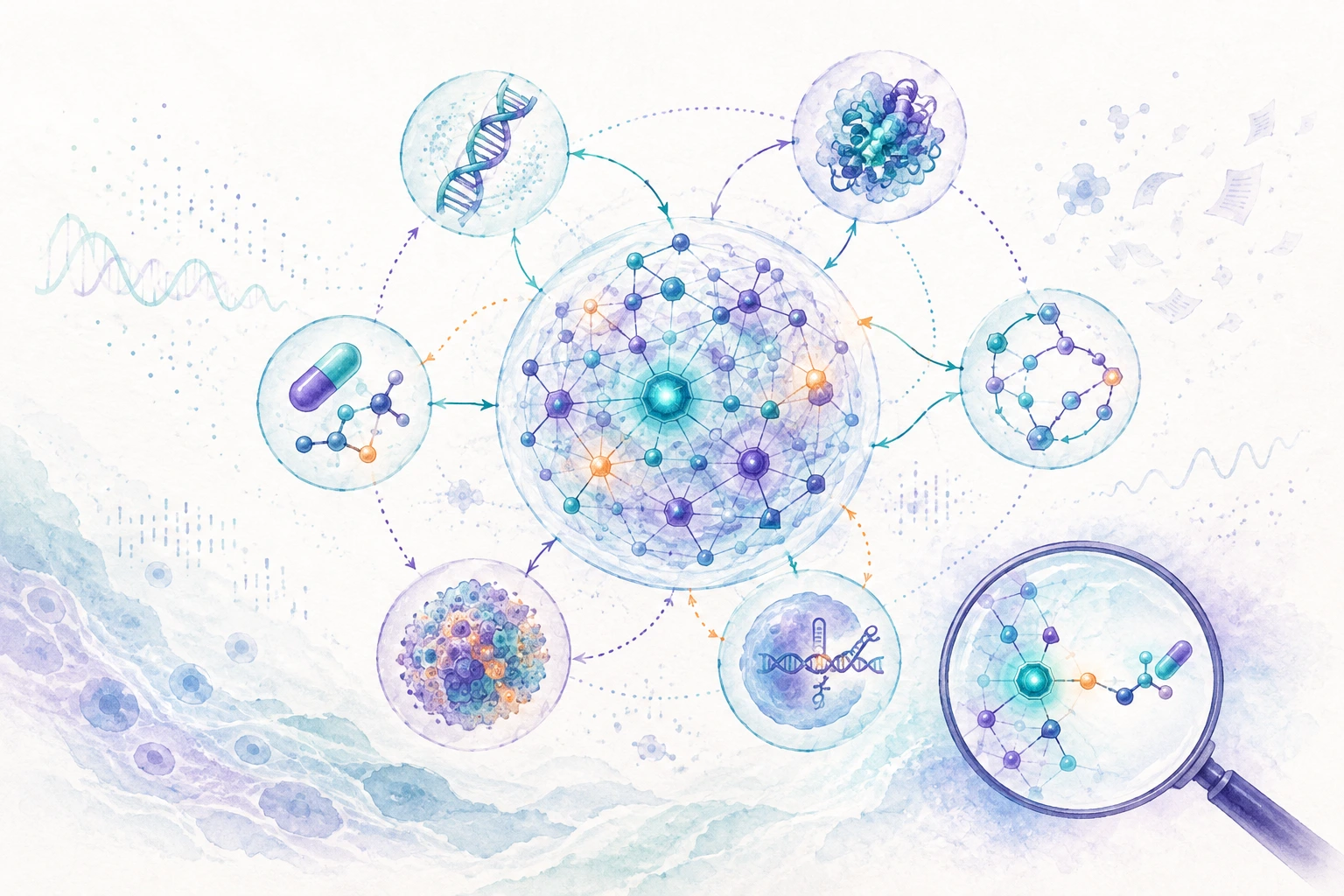
The selection problem is the one we work on. Polly Knowledge Graph assembles scattered multi-omic and clinical data into a structured, disease-level view for target and antigen selection, with the evidence trail intact. The same approach that supports oncology target discovery applies to deciding which pathogen or tumor features are worth pursuing in a vaccine. Faster discovery does not shorten clinical validation. It surely results in less time wasted on candidates that were never going to work.
If you'd love to explore how we help in making your program a success, Talk to our Experts!


.svg)
.svg)


%201%20(1).svg)


%201%20(1).svg)

%20(1).svg)




.svg)
%20(1).svg)


