Accelerating CHO Cell Line Development: Polly Knowledge Graphs for Precision Engineering

High-Level Architecture for CDMO Capacity Modeling

Modern bioprocessing requires data-driven systems to deliver complex biologics at scale. However, Cell Line Development (CLD) remains a persistent bottleneck, trapped in iterative "screen and select" cycles. Upstream teams must extract insights from vast multi-omics datasets, verify genetic targets across disconnected databases, and build performance models line-by-line. Despite genomic advances, R&D teams often lack the framework to predict which gene perturbations - such as specific knockouts (KO) or overexpressions (OE), will optimize titer and stability without compromising cell growth. This slows down development timelines, creates inconsistencies and results in variable productivity, high capital risk, and reduced operational efficiency during scale-up.

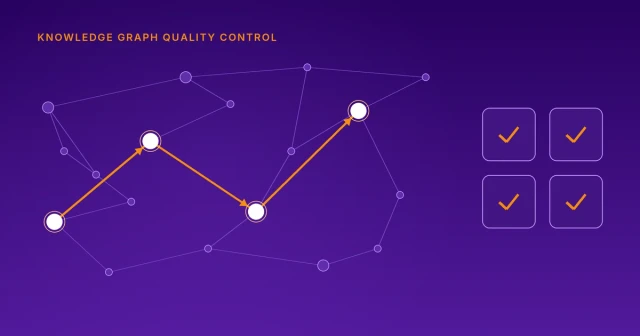
Polly Knowledge Graphs (KGs) bridge the CLD complexity gap. By harmonizing internal multi-omics and bioprocess metadata, PubMed articles, it synthesizes fragmented data into a computable source of truth. This enables a shift from empirical trial-and-error to "Right-First-Time" engineering, accelerating target identification from years to months.

The High Cost of Biological Uncertainty

CHO cell optimization is responsible for production of mAbs and many other biologics but the transition from a laboratory breakthrough to a high-yield manufacturing system is hindered by several structural challenges:

  • The Cost of Empirical Guesswork: Traditional optimization relies on large-scale million dollar iterative experiments costing thousands per run. Without mechanistic insight, these cycles remain reactive rather than predictive.
  • Limited evidence integration: Public CHO datasets and functional studies are scattered, often manually curated, and lack harmonization, limiting evidence-backed gene target prioritization.
  • The Validation Gap: Standard bioinformatics pipelines identify hundreds of gene identifiers (DEGs) that correlate with productivity. Distinguishing "drivers" from "passengers" is nearly impossible without a framework to prioritize high-risk perturbations.
  • Genomic Plasticity: Genetic instability leads to quality drift (e.g., glycosylation changes, protein folding stress), which frequently causes failures during scale-up.
  • Siloed data landscape: In-house multi-omics, bioprocess data, and experimental metadata remain fragmented and disconnected from public CHO datasets and literature.

Our Approach- Polly Knowledge Graphs

Elucidata’s Agentic AI system Polly Knowledge Graphs converts fragmented CHO data into a structured, computable source of truth that enables rapid identification of metabolic drivers and accurate concentration determination of media and feed. By introducing Polly Knowledge Graphs into existing workflows, teams can generate predictive models faster, identify stability risks early, and standardize engineering strategies across global teams for productivity optimization and faster development of biologics.

1. Unified Multimodal Harmonization

Polly standardizes diverse data types including genomic, proteomic, and metabolomic and more and also integrates internal experimental metadata (like raw LC-MS and bioreactor data) with literature-derived causal evidence, ensuring 100% Ontology Mapping. This creates a common language across your entire R&D organization.

2. Mapping Multi-omics Relationships

The platform captures the functional links between biological entities and process variables:

  • Transcription & Translation: Pinpoints mRNA processing pathways and protein-protein interaction (PPI) modules.
  • Quality Control (UPR): Identifies candidates to relieve cellular stress through targeted engineering.
  • Exocytosis & Secretion: Ranks targets that optimize protein export without triggering growth penalties.

3. AI-Driven Target Prioritization

Using custom scoring algorithms, Polly narrows thousands of variables into a shortlist of high-impact drivers. Targets are evaluated based on evidence strength, causal relevance, and engineering feasibility within a manufacturing environment.

From Insight to Impact: What This Means for Your Pipeline

By shifting to a Knowledge Graph-led approach, biopharma teams move beyond simple data collection and into a new era of Predictive CHO Engineering.

  • Model Before You Meddle: Imagine knowing whether a gene modification will truly boost titer or cause a lethal growth penalty before hitting the lab. Polly allows you to simulate the impact of perturbations, saving months of wasted wet-bench time.
  • Total Scientific Traceability: Every prioritized target is fully auditable, linked directly to underlying omics evidence and the global corpus of CHO literature.
  • Precision Metabolic Insights: Reveal the specific metabolic bottlenecks holding back your clones. This enables targeted formulation improvements for media and feed that are backed by deep pathway analysis.

The Outcomes: A Competitive Edge in Bioprocessing

The results of moving from reactive screening to data-driven engineering are transformative:

  • Accelerated Timelines: Achieve 3x faster identification of high-producing clones, moving your biologic to clinical trials sooner.
  • De-Risked Scale-Up: By modeling clone stability and quality early, you prevent the late-stage failures that burn capital and stall production.
  • Scalable, Repeatable Insights: Generate evidence-backed strategies that aren't dependent on a single expert’s knowledge, allowing you to scale insights across different CHO host strains and global teams.

Case Study: Reducing Hypothesis Cycles from Months to Hours

A global biopharma partner used Polly KG to de-risk their engineering strategy. By scouting ~45,000 CHO-specific publications and integrating historical mass spec data, they:

  • Identified a hidden correlation between protein folding markers and specific metabolic bottlenecks.
  • Reduced the candidate list from 500+ DEGs to 5 validated metabolic targets.
  • Eliminated millions in operational costs by avoiding low-probability iterative cycles.

Conclusion: Shifting from Reactive Screening to Predictive Engineering

The path to a high-titer CHO cell line no longer needs to be a gamble. Polly’s Knowledge Graph framework provides the evidence-backed roadmap required to eliminate uncertainty in CHO development. By shifting from reactive screening to data-driven engineering, biopharma teams gain a decisive competitive advantage, ensuring CHO-derived biologics reach patients with predictable stability and unprecedented speed.

Blog Categories

Talk to our Data Expert
Thank you for reaching out!

Our team will get in touch with you over email within next 24-48hrs.
Oops! Something went wrong while submitting the form.

Watch the full Webinar

Blog Categories