.svg)
%201.svg)
Fast-track clinical decision-making in tumor board settings
%20(1).svg)

April 22, 2026
.png)
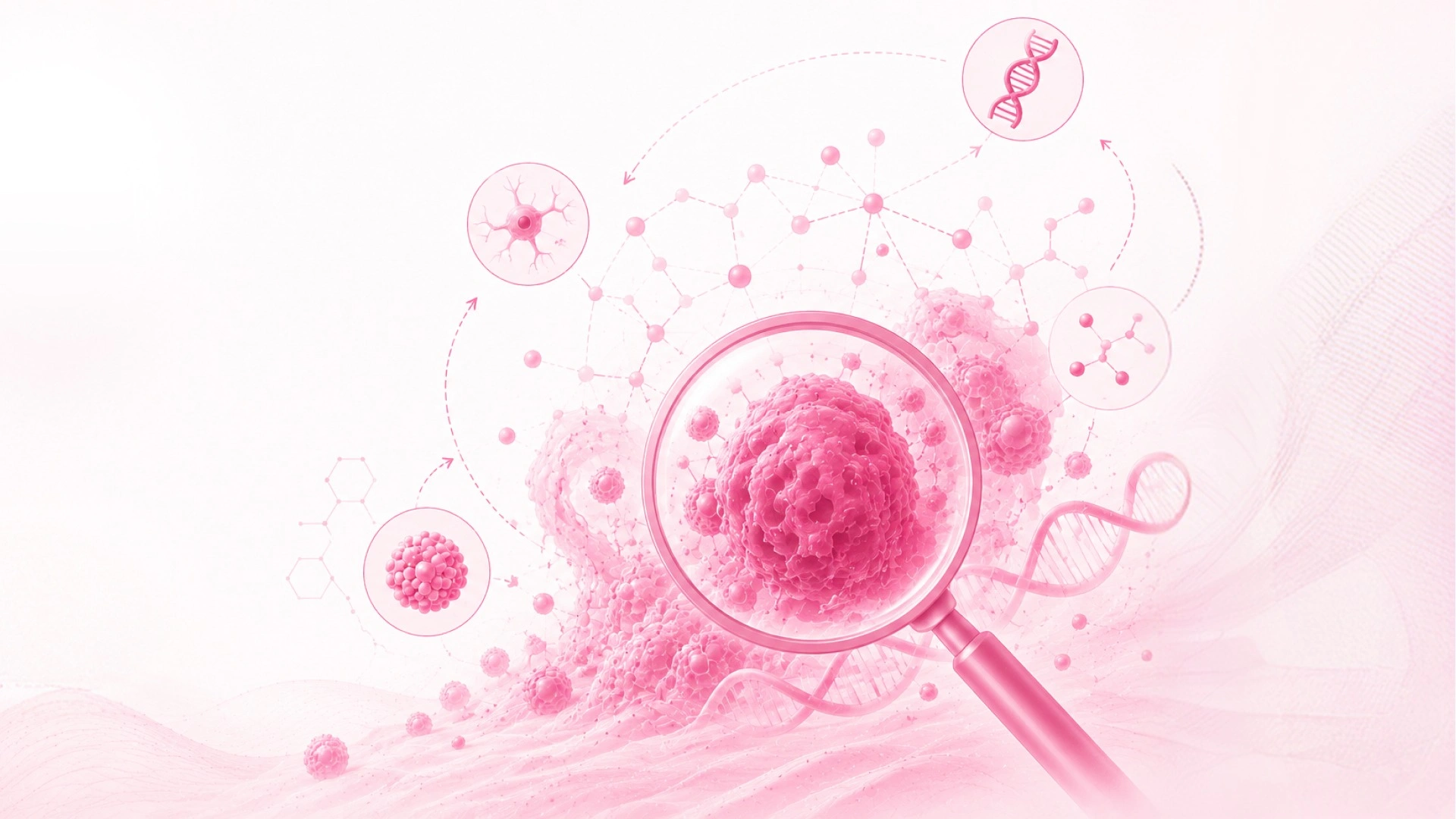
Molecular Tumor Boards (MTBs) often struggle to process more than a handful of cases per session while AI-augmented MTBs are scaling to address their entire patient population with precision. This widening gap means that without automation, institutions aren't just losing time; they are missing the "hidden" insights like -rare drug-variant matches and longitudinal patterns that define modern oncology.
The Molecular Tumor Board should be the strategic center where oncology, pathology, and genomics converge. However, at many institutions, it has become an administrative bottleneck. A single patient’s profile is a fragmented mosaic of genomic reports, longitudinal EHR narratives, and a constant stream of new clinical trial data. When highly trained clinicians spend hours manually synthesizing these dossiers, the consequences are direct: fewer patients are reviewed, treatment starts are delayed, and the risk of overlooking a key therapeutic pivot increases.
To solve this, we deploy our agentic AI workflow Polly that transforms the "pre-read" from a disorganized pile of documents into a structured, evidence-linked patient dossier. This doesn't just simplify preparation; it enables boards to address more patients with greater contextual depth incorporating imaging readouts, prior lines of therapy, and real-time trial matching exceeding the capacity of manual curation.
Tumor Boards are designed for high-stakes deliberation, yet they are often bogged down by data friction. When evaluating a patient with a rare mutation or a complex treatment history, the evidence is scattered:
This manual synthesis is risky. Inconsistent data formats and the volume of literature increase the chance that a life-saving therapeutic option or a critical safety signal is overlooked.
We leverage a specialized agentic AI system to bridge the gap between raw medical records and clinical action.
Instead of simple keyword searches, Polly Xtract uses a multi-agent engine to ingest heterogeneous documents from NGS reports to pathology notes. It doesn't just "read" text; it understands the clinical context.
All extracted data is pushed into a relational Atlas environment. This creates a "longitudinal patient twin" that integrates clinical, genomic, and trial data into a single queryable source.
By automating the preparation phase, the MTB shifts from a review of what happened to a discussion of what to do.
.png)
Implementing an agentic AI workflow transforms the economics and efficacy of precision oncology:
Connect with us to explore how our agentic AI workflow can streamline your clinical decision-making today.


.svg)
.svg)


%201%20(1).svg)


%201%20(1).svg)

%20(1).svg)




.svg)
%20(1).svg)


