.png)

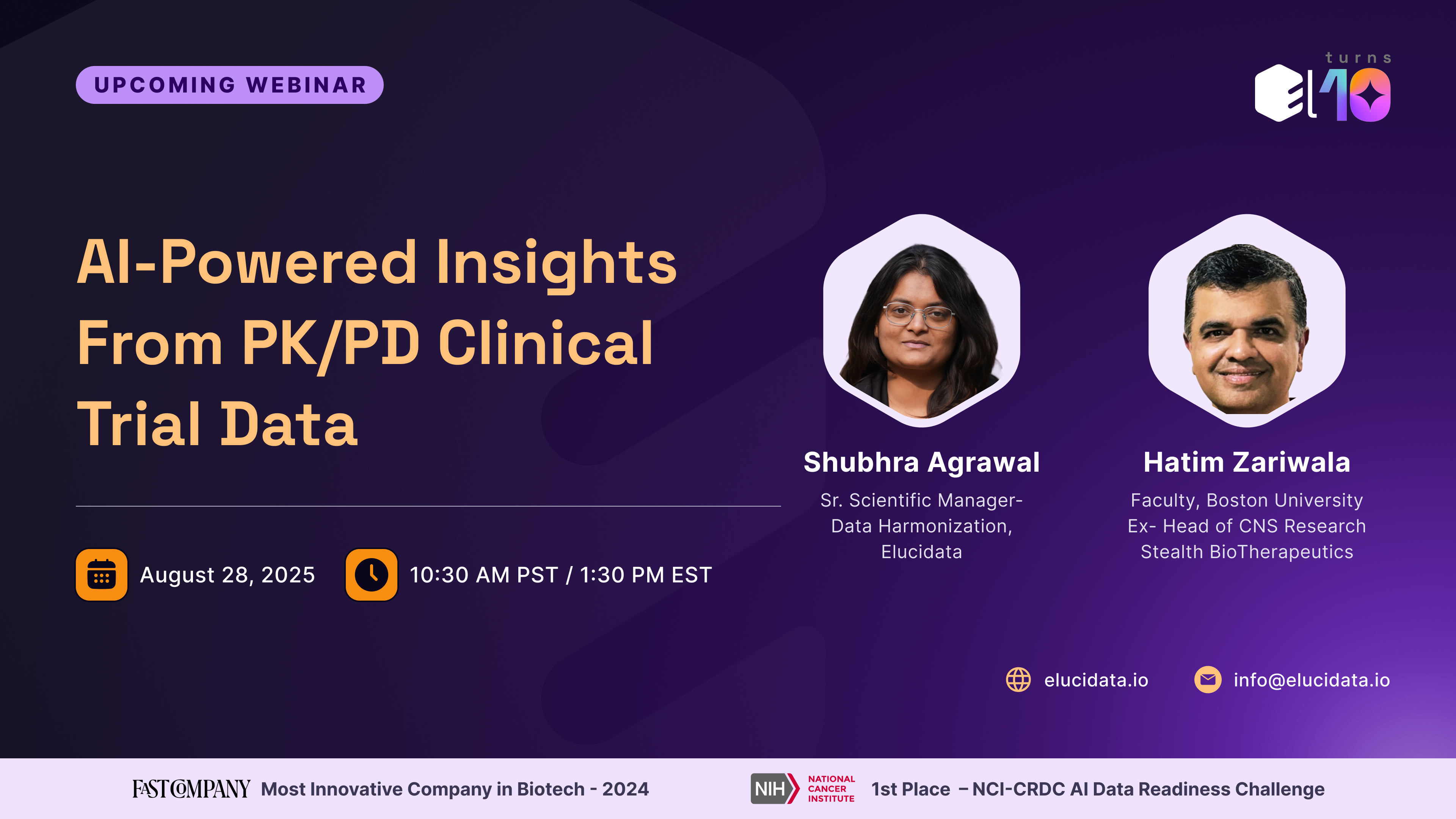
Standard AI models rely on the assumption that real-world data matches training patterns (IID). However, in the complex landscape of biology, this assumption frequently breaks. Valuable signals such as unexpected drug responses or rare patient profiles, often appear as "Out-of-Distribution" (OOD) data, which traditional models struggle to interpret. Join Elucidata’s team as we present a data-centric AI framework designed to navigate these challenges. We will explore why "data is the hero" and how prioritizing data quality over model size is essential for reliable performance in the "long tail" of scientific discovery. The session will focus on three key pillars for solving OOD problems:
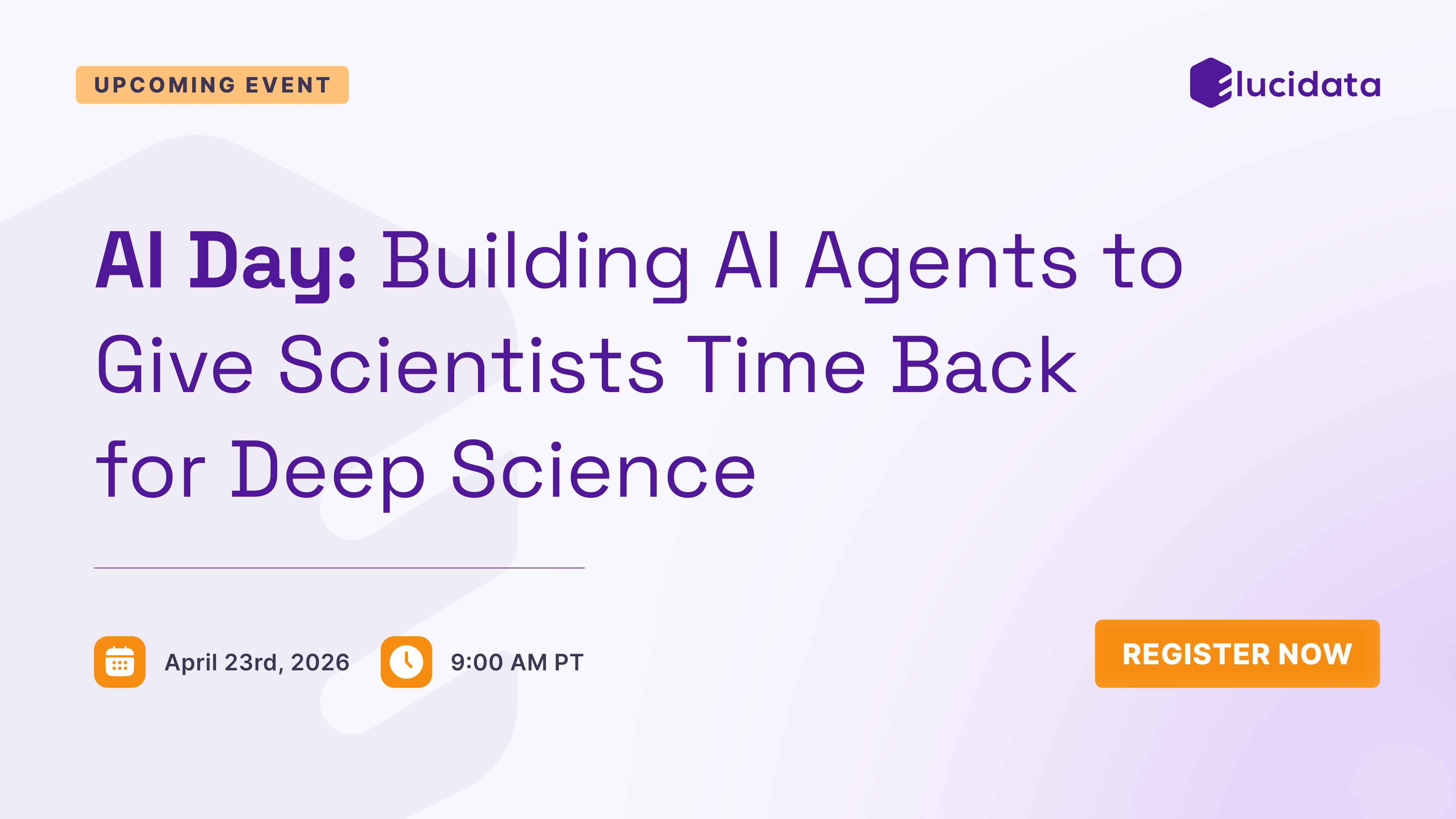
The webinar will also explore AI tools like Ultra Deep Research, highlight how we build and deploy various AI agents, share real-world lessons from the field, and feature insights on dealing with OOD outliers into the next generation of innovation.


Standard AI models rely on the assumption that real-world data matches training patterns (IID). However, in the complex landscape of biology, this assumption frequently breaks. Valuable signals such as unexpected drug responses or rare patient profiles, often appear as "Out-of-Distribution" (OOD) data, which traditional models struggle to interpret. Join Elucidata’s team as we present a data-centric AI framework designed to navigate these challenges. We will explore why "data is the hero" and how prioritizing data quality over model size is essential for reliable performance in the "long tail" of scientific discovery. The session will focus on three key pillars for solving OOD problems:
The webinar will also explore AI tools like Ultra Deep Research, highlight how we build and deploy various AI agents, share real-world lessons from the field, and feature insights on dealing with OOD outliers into the next generation of innovation.



.png)
.png)
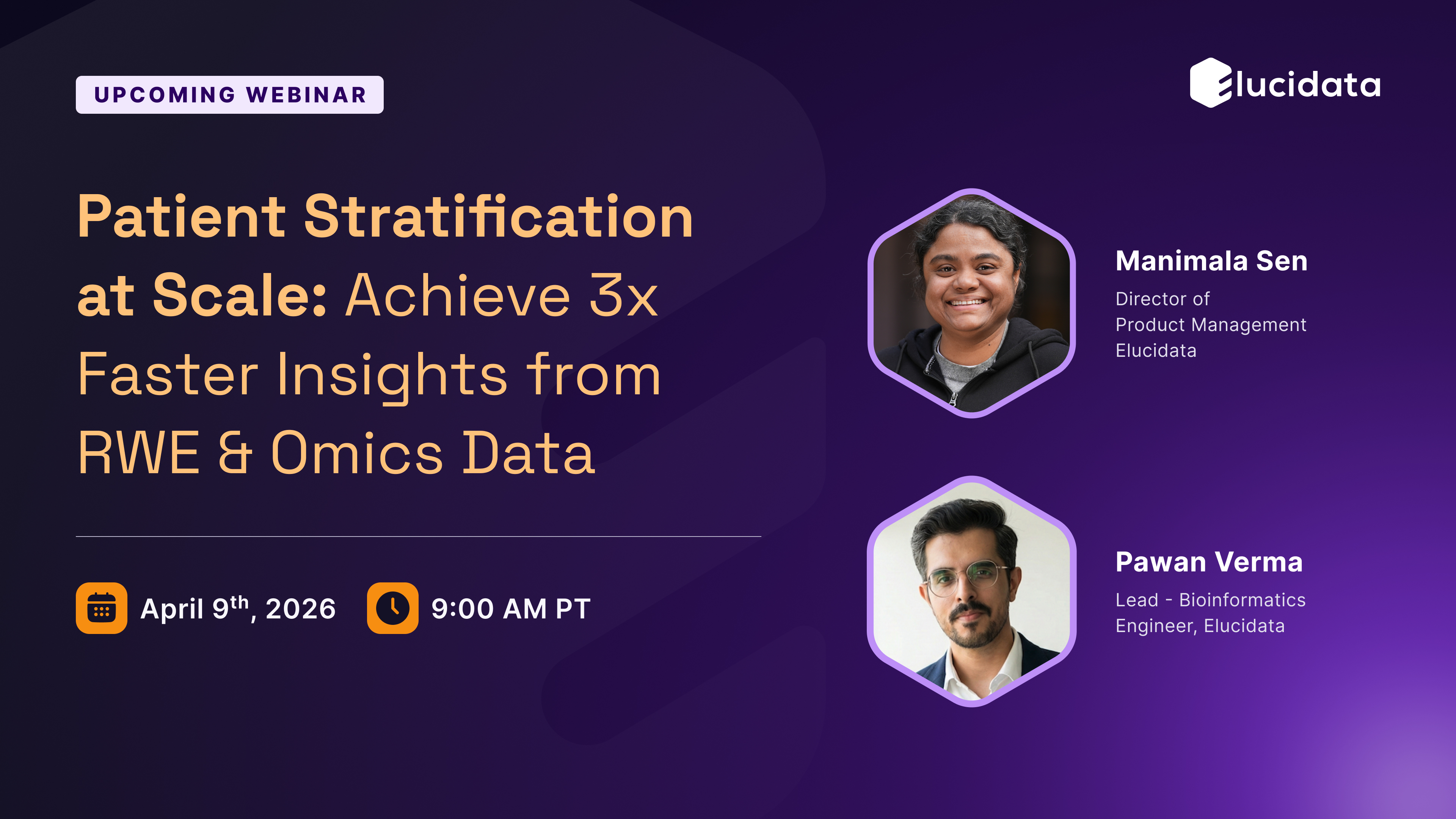
Scaling clinico-genomic data integration: Large pharmaceutical organizations working with external data providers used Polly to build interoperable clinico-genomic data products 6x faster.
Although purchased datasets are often labeled as "clean," they still lack interoperability—Polly's pipelines bridge this gap with robust integration and harmonization.
Information Retrieval: Drug safety monitoring teams used Polly's Knowledge Graph powered co-scientist to conversationally retrieve the right cohorts & assess drug response—cutting discovery time by 70%.
%201.svg)

This session gives biomedical researchers and data scientists the practical steps to build stronger, more reliable AI for drug discovery.

.png)
.png)
.png)

.png)


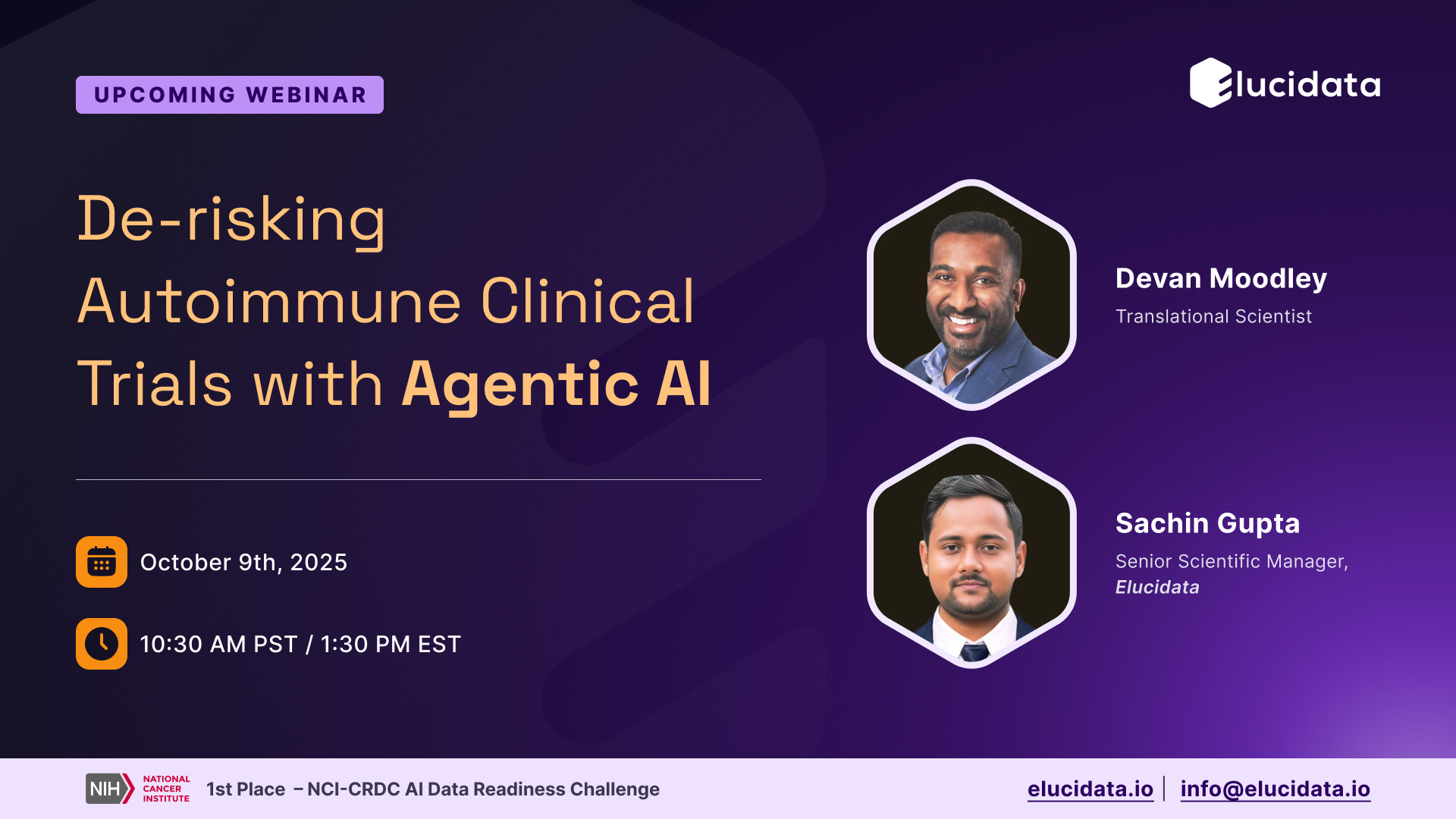
If you’re working with complex biological data, you may be asking:
Can generative AI truly assist in scientific reasoning, not just data analysis?
What does it mean for hypothesis generation, literature review, or even designing experiments?
Could this accelerate—not replace—my discovery pipeline?
Whether you're skeptical, curious, or already experimenting with AI in your lab—this is a session designed to ground your understanding in evidence, not speculation.
.png)


.svg)
.svg)


%201%20(1).svg)


.svg)

%20(3).webp)




.png)
.png)
.png)
.png)
.png)
.png)

.webp)

.webp)
.webp)
.webp)
.webp)
.webp)
.webp)
.webp)
.webp)
.webp)
.webp)
.webp)
.webp)


.svg)
%20(1).svg)


