Webinar
Upcoming Webinar
In collaboration with

Upgrading the Tech Stack: From Manual Relays to AI-Powered Precision

What the AI Co-Scientist Paper Actually Demonstrates for Biologists and Data Scientists

February 24, 2026
9 AM PT

The CDMO industry is at a turning point. As demand for complex modalities like ADCs and cell therapies surges, traditional "manual relay" project evaluations are no longer sustainable. With 60% of pharmaceutical organizations now prioritizing AI readiness in their partners, fragmented legacy systems have become a significant operational liability.

This reliance on unstructured data creates a "spreadsheet tax" - a systemic drain on technical resources that complicates the bid process. When experts must manually extract molecular data from unsearchable PDFs, the resulting delays hinder an organization's ability to model capacity and mitigate risk in real-time. In a market defined by rapid lead times, the competitive advantage belongs to those who can convert raw inquiry data into actionable intelligence in minutes, not weeks.

Join us for the webinar to explore how our AI technologies are reshaping the future of pharmaceutical manufacturing.

Register Now
Please enter only business email id.
Thank you for registering.

Please check your inbox for further details to join this webinar.
Oops! Something went wrong while submitting the form.
Registrations are closed!
Meet the Expert of this discussion
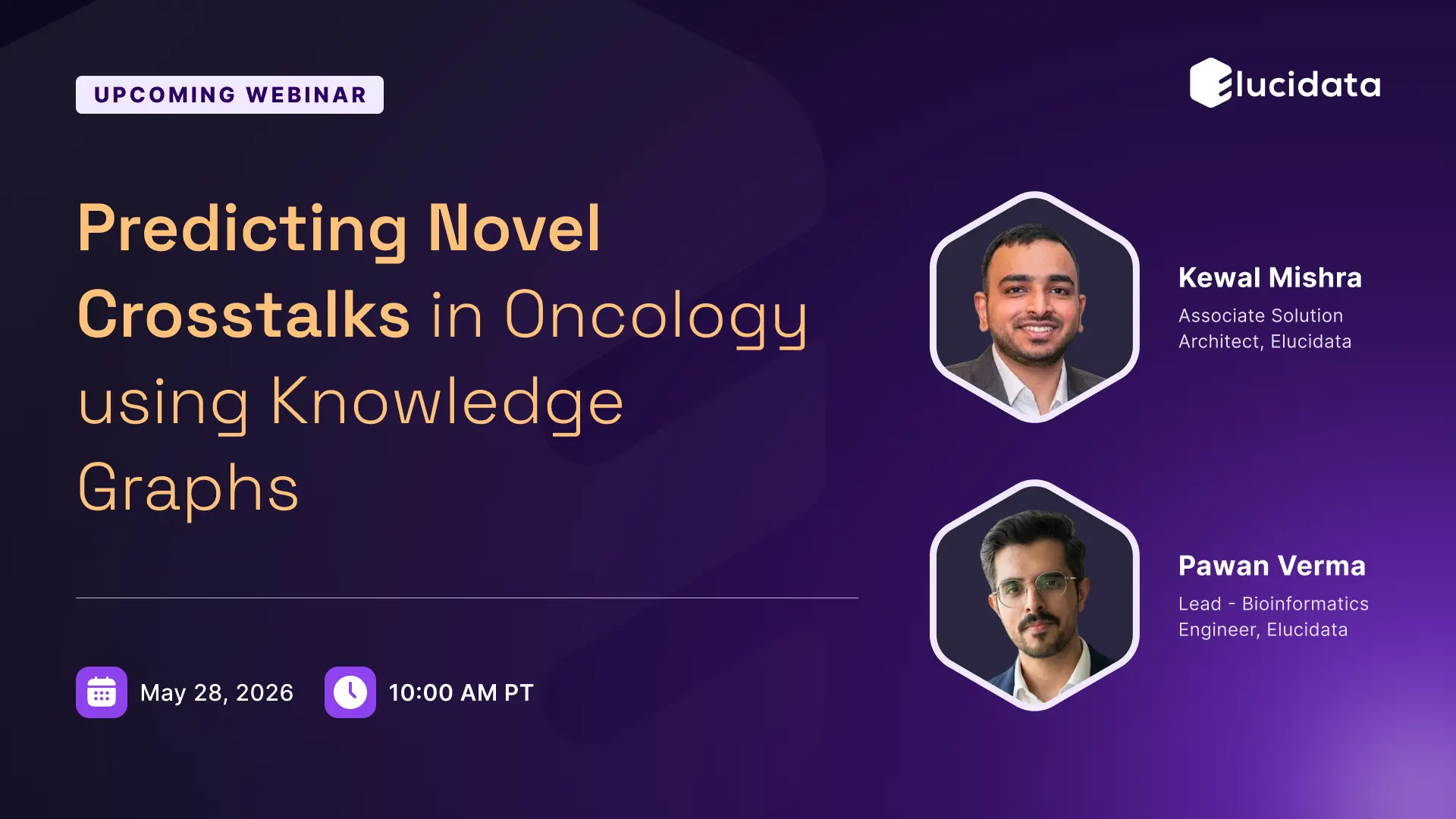
Kewal Mishra
Associate Solution Architect, Elucidata
Rahul Dhull
Solutions Consultant, Elucidata

Real-World Applications We’ll Cover

  • Scaling clinico-genomic data integration: Large pharmaceutical organizations working with external data providers used Polly to build interoperable clinico-genomic data products 6x faster.
    Although purchased datasets are often labeled as "clean," they still lack interoperability—Polly's pipelines bridge this gap with robust integration and harmonization.

  • Information Retrieval: Drug safety monitoring teams used Polly's Knowledge Graph powered co-scientist to conversationally retrieve the right cohorts & assess drug response—cutting discovery time by 70%.

Register now
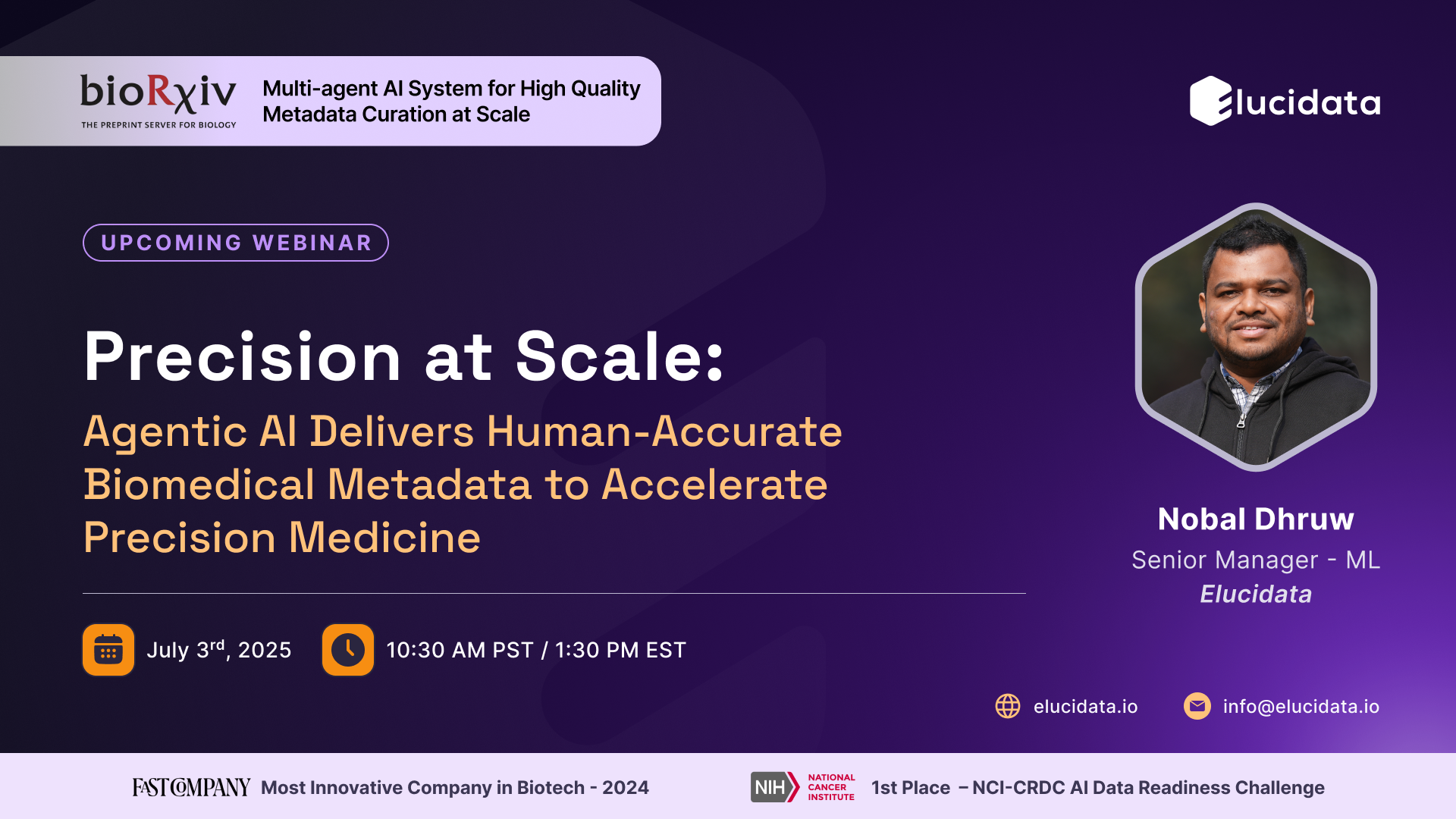
Join us for a behind-the-scenes look at a Multi-agent AI system that achieves:
  • 93% recall across 23 key metadata fields including tissue, disease, cell line, donor ID, and treatment.
  • Outperformance of GPT-4.1 single-pass prompting on accuracy, F1 score, and traceability.
  • Curation of 4652 samples from 78 GEO datasets in days instead of weeks.
  • 4x reduction in manual effort equivalent to replacing a 3-person expert team working for 1 month.
  • Human-level accuracy, with 100% concordance on disease and 97% on gender based on CellxGene benchmarks.
  • Traceable records with field-level evidence attribution and confidence scores.
Register for our webinar to see how the Agentic AI system fits into scalable data workflows.

What You’ll Learn

  • Build Your Data Foundation: Learn how to aggregate disparate chemical libraries and external registries into a "single source of truth"- the prerequisite for any successful AI deployment.
  • The CDMO Maturity Framework: Benchmark your organization on the 5-level scale. Identify your gaps and your path forward.
  • Deploying AI Technical Co-Pilots: See a live demonstration of intelligent agents that recognize chemical structures in unstructured documents, convert them to IUPAC formulas, and validate safety data automatically.
  • Auditability & GxP Compliance: Learn to implement tracking systems where every AI-driven decision is fully documented, maintaining regulatory readiness while scaling automation.
Register now
Meet the Expert of this discussion
Kewal Mishra
Associate Solution Architect, Elucidata
Rahul Dhull
Solutions Consultant, Elucidata
Meet the Expert of this discussion
Kewal Mishra
Associate Solution Architect, Elucidata
Rahul Dhull
Solutions Consultant, Elucidata
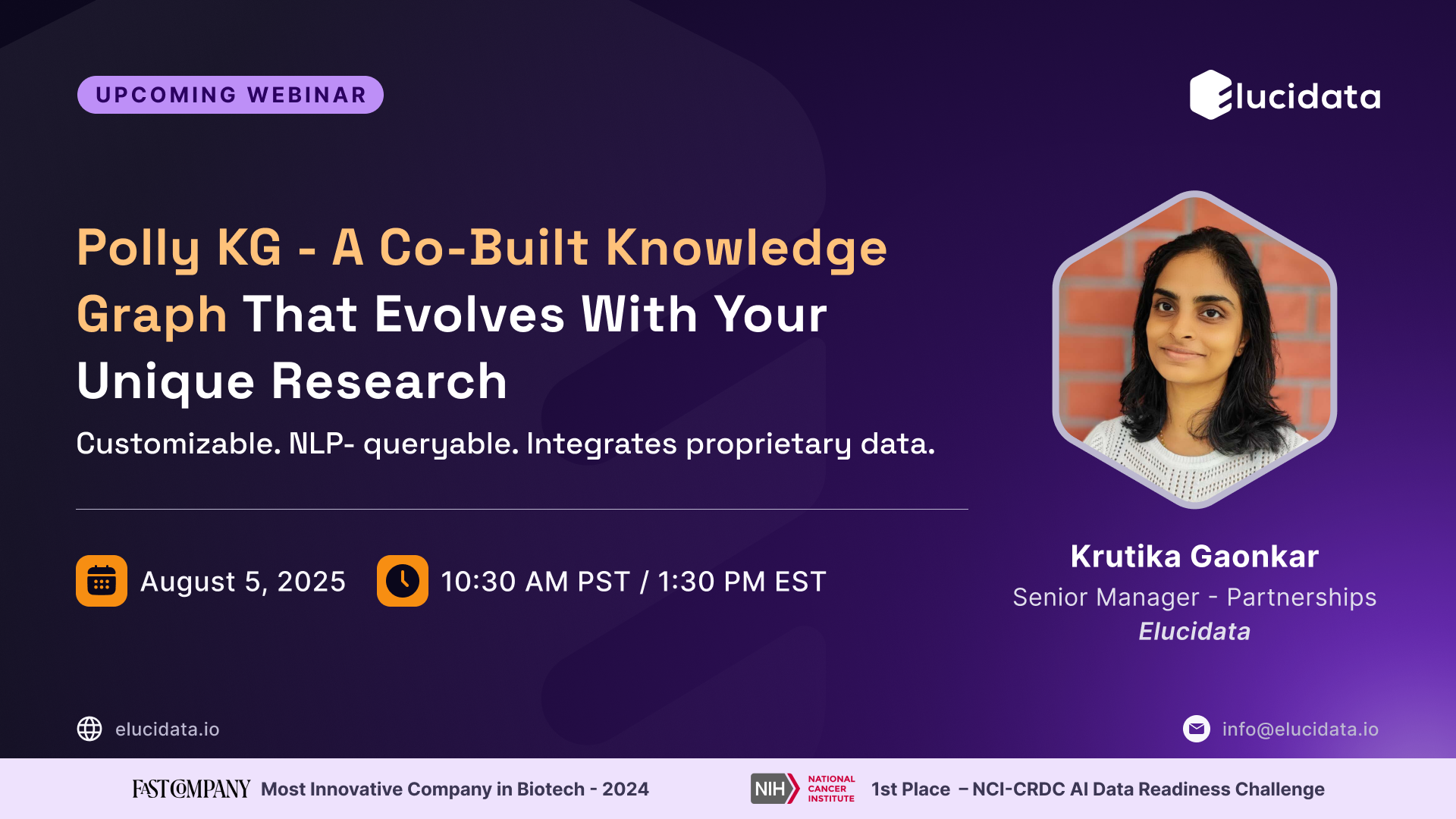
What Sets polly KG Apart
Natural language querying with reasoning on
the roadmap
Cross-species graphs built from both proprietary
and public data
Custom scoring logic and domain-specific
ontology support
Seamless integration with internal tools, platforms,
and security frameworks
Who Should Attend
Translational Scientists and Discovery Leads
Computational Biologists and Data Scientists
Platform Owners, heads of R&D IT
Innovation and AI Strategy Teams
Who Should Attend
Translational Scientists and Discovery Leads
Data Science & Informatics Teams
Computational Biologists and R&D IT Leaders
Innovation & AI Strategy Teams

Why This Matters for Biomedical Researchers

Adopting a Data-Centric and OOD-aware approach is essential for delivering real therapeutic impact.

If you’re working with complex biological data, you may be asking:

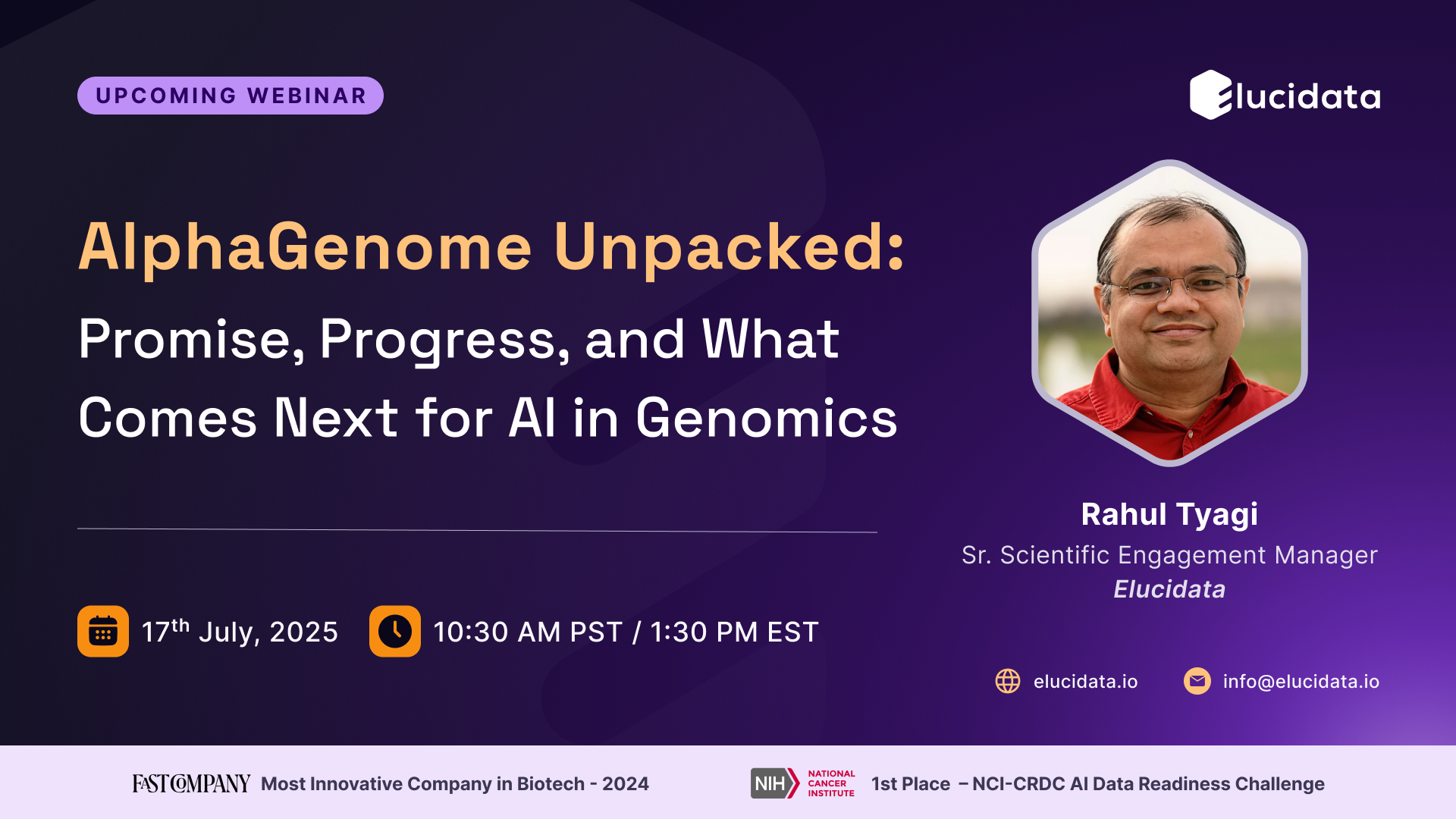
  • Can generative AI truly assist in scientific reasoning, not just data analysis?

  • What does it mean for hypothesis generation, literature review, or even designing experiments?

  • Could this accelerate—not replace—my discovery pipeline?

Whether you're skeptical, curious, or already experimenting with AI in your lab—this is a session designed to ground your understanding in evidence, not speculation.

  • Accelerated Tech Transfer: By automating data extraction, researchers see their molecules move from the lab bench to the production line with significantly compressed timelines.
  • Reduced Development Risk: Harmonized data ensures that critical specifications like synthesis parameters and purity requirements are never "lost in translation" during the handoff to manufacturing.
  • Guaranteed Data Integrity: Automated validation against chemical registries eliminates the manual entry errors that lead to batch failures and regulatory hurdles.
  • Enhanced Strategic Collaboration: Modernizing the RFP process shifts the CDMO from a vendor to a strategic partner, allowing researchers to model outcomes and capacity shifts in real-time.

Traditional KG

  • Accelerated Tech Transfer: By automating data extraction, researchers see their molecules move from the lab bench to the production line with significantly compressed timelines.
  • Reduced Development Risk: Harmonized data ensures that critical specifications like synthesis parameters and purity requirements are never "lost in translation" during the handoff to manufacturing.
  • Guaranteed Data Integrity: Automated validation against chemical registries eliminates the manual entry errors that lead to batch failures and regulatory hurdles.
  • Enhanced Strategic Collaboration: Modernizing the RFP process shifts the CDMO from a vendor to a strategic partner, allowing researchers to model outcomes and capacity shifts in real-time.

Polly KG

Register now
Meet the Experts of this discussion
Kewal Mishra
Associate Solution Architect, Elucidata
Rahul Dhull
Solutions Consultant, Elucidata
Harshveer Singh
Director Engineering Research & Development, Elucidata
Key Takeaways
How data providers ensure adherence to quality standards through validation and compliance.
How GUI-based workflows, CLI tools, and collaborative workspaces enable streamlined data ingestion and synchronization at scale.
Understand how automated pipelines assess conformance, plausibility, and consistency, ensuring high-quality, AI-ready data products.
Key Takeaways
Reduce operational costs by streamlining data delivery through reusable, governed products.
Accelerate diagnostic development and clinical trial execution by delivering compliant, high-quality data at scale.
Improve audit readiness and regulatory confidence through governed data products and built-in quality assurance.
Equip cross-functional teams to act on trusted data—faster, and with greater confidence.
Who Should Attend
Translational Scientists and Discovery Leads
Computational Biologists and Data Scientists
Platform Owners, heads of R&D IT
Innovation and AI Strategy Teams
What Sets polly KG Apart
First KG to integrate molecular data alongside patient data records
Feature distillation pipeline for high-dimensional clinical and trial data
Base KG usable immediately, with flexible schema extensions
Cross-species graphs built from proprietary, public, and clinical datasets
Who Should Attend?

All Webinars