Webinar
Upcoming Webinar
In collaboration with

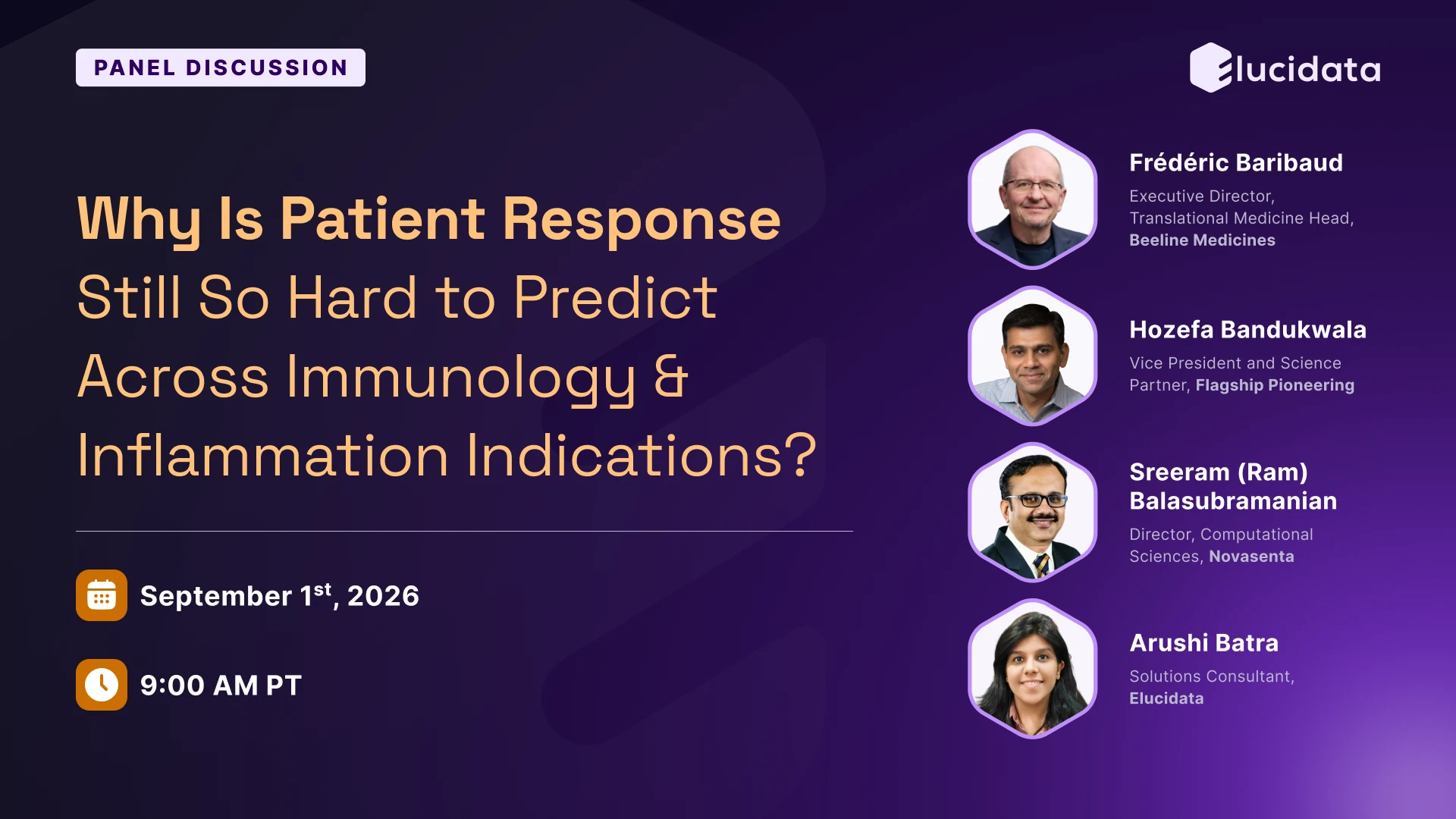
Why Is Patient Response Still So Hard to Predict Across Immunology & Inflammation Indications?

What the AI Co-Scientist Paper Actually Demonstrates for Biologists and Data Scientists

September 1, 2026
9 AM PT

I&I diseases involve complex interactions between immune cells, inflammatory pathways, and the tissues where disease develops. Even with increasingly precise, mechanism-driven therapies, patients with the same diagnosis can respond very differently to treatment.

The field has made major progress in understanding disease and developing targeted therapies. Yet questions around why some approaches work, why others fall short, and what drives differences in patient response remain open.

As researchers look more closely at immune-cell states, disease heterogeneity, tissue biology, and underlying mechanisms, new opportunities are emerging to rethink how I&I therapies are discovered and developed.

Join us for a discussion with experts leading drug discovery and translational programs across I&I indications as we take stock of current approaches, explore where the field is headed, and discuss what could shape the next generation of I&I drug development.

Register Now
Please enter only business email id.
Thank you for registering.

Please check your inbox for further details to join this webinar.
Oops! Something went wrong while submitting the form.
Registrations are closed!
Meet the Expert of this discussion
Frédéric Baribaud
Executive Director, Translational Medicine Head, Beeline Medicines
Hozefa Bandukwala
Vice President and Science Partner , Flagship Pioneering
Sreeram Balasubramanian
Director, Computational Sciences- Novasenta

Real-World Applications We’ll Cover

  • Scaling clinico-genomic data integration: Large pharmaceutical organizations working with external data providers used Polly to build interoperable clinico-genomic data products 6x faster.
    Although purchased datasets are often labeled as "clean," they still lack interoperability—Polly's pipelines bridge this gap with robust integration and harmonization.

  • Information Retrieval: Drug safety monitoring teams used Polly's Knowledge Graph powered co-scientist to conversationally retrieve the right cohorts & assess drug response—cutting discovery time by 70%.

Register now
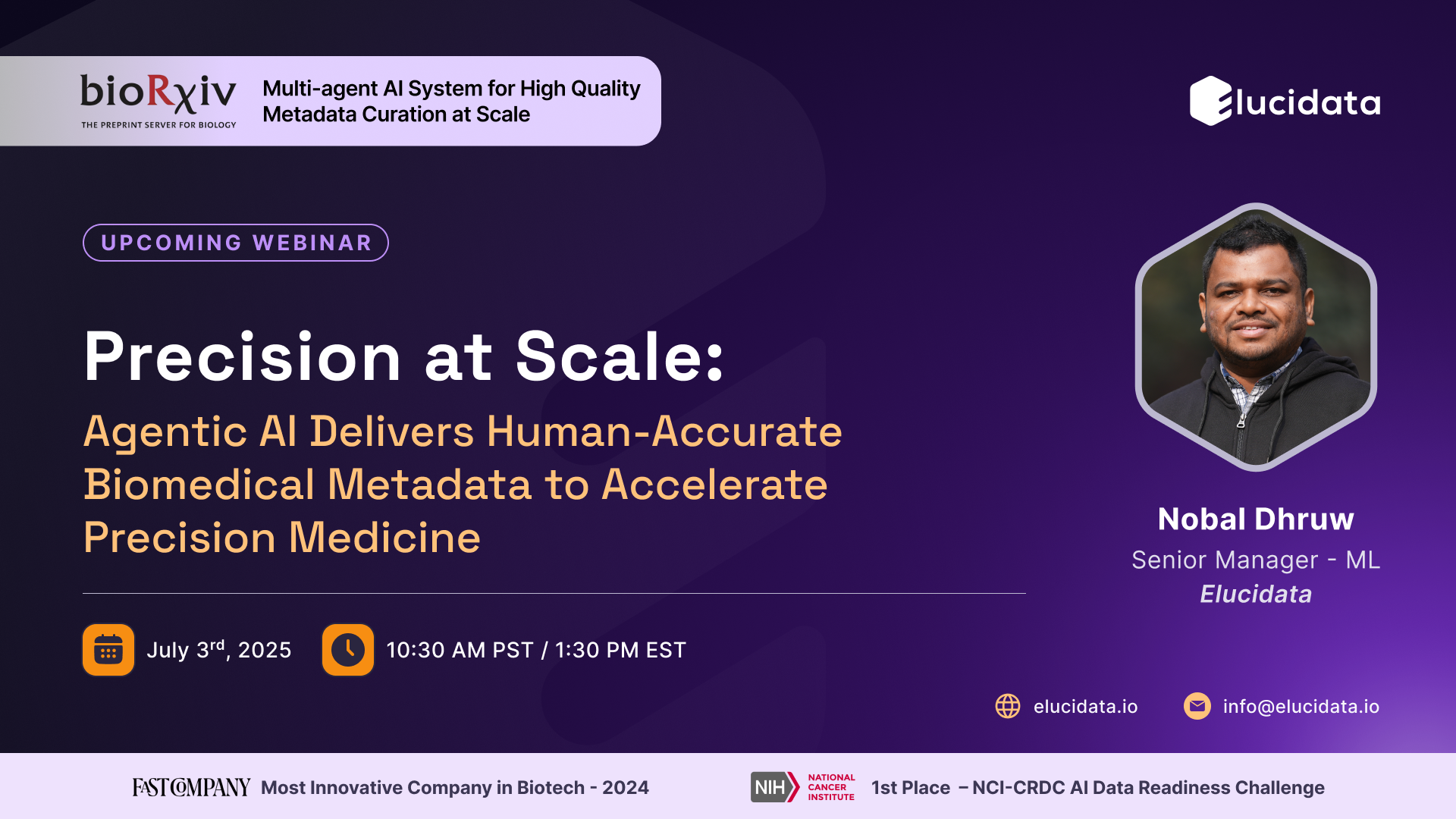
Join us for a behind-the-scenes look at a Multi-agent AI system that achieves:
  • 93% recall across 23 key metadata fields including tissue, disease, cell line, donor ID, and treatment.
  • Outperformance of GPT-4.1 single-pass prompting on accuracy, F1 score, and traceability.
  • Curation of 4652 samples from 78 GEO datasets in days instead of weeks.
  • 4x reduction in manual effort equivalent to replacing a 3-person expert team working for 1 month.
  • Human-level accuracy, with 100% concordance on disease and 97% on gender based on CellxGene benchmarks.
  • Traceable records with field-level evidence attribution and confidence scores.
Register for our webinar to see how the Agentic AI system fits into scalable data workflows.

What You’ll Learn

  • Current approaches in I&I drug development - What have targeted therapies taught us about where the field is making progress, and where are important gaps still visible?
  • Understanding patient response - How do differences in immune-cell states, disease biology, and tissue environments influence whether a therapy succeeds or falls short?
  • Finding new therapeutic opportunities - Where could deeper insights into I&I biology reveal mechanisms or targets that current approaches may be missing?
  • The role of biomarkers and patient stratification - How can we better identify meaningful differences between patients and use them to guide therapeutic development?
  • What comes next for I&I - Which emerging areas of biology, therapeutic modalities, and drug-development approaches could shape the next phase of the field?
Register now
Meet the Expert of this discussion
Frédéric Baribaud
Executive Director, Translational Medicine Head, Beeline Medicines
Hozefa Bandukwala
Vice President and Science Partner , Flagship Pioneering
Sreeram Balasubramanian
Director, Computational Sciences- Novasenta
Meet the Expert of this discussion
Frédéric Baribaud
Executive Director, Translational Medicine Head, Beeline Medicines
Hozefa Bandukwala
Vice President and Science Partner , Flagship Pioneering
Sreeram Balasubramanian
Director, Computational Sciences- Novasenta
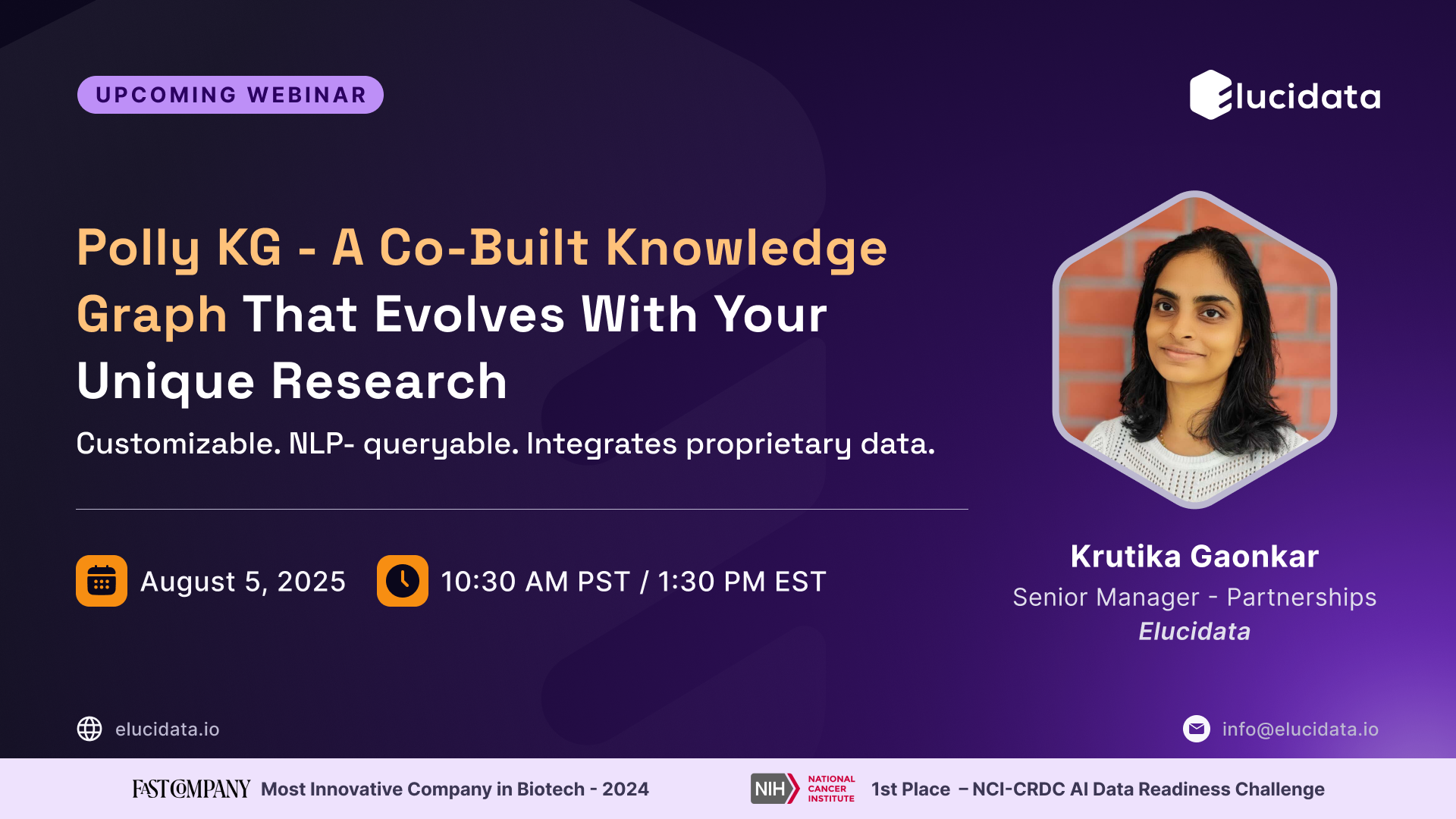
What Sets polly KG Apart
Natural language querying with reasoning on
the roadmap
Cross-species graphs built from both proprietary
and public data
Custom scoring logic and domain-specific
ontology support
Seamless integration with internal tools, platforms,
and security frameworks
Who Should Attend
Translational Scientists and Discovery Leads
Computational Biologists and Data Scientists
Platform Owners, heads of R&D IT
Innovation and AI Strategy Teams
Who Should Attend
Translational Scientists and Discovery Leads
Data Science & Informatics Teams
Computational Biologists and R&D IT Leaders
Innovation & AI Strategy Teams

Why This Matters for Biomedical Researchers

Adopting a Data-Centric and OOD-aware approach is essential for delivering real therapeutic impact.

If you’re working with complex biological data, you may be asking:

  • Can generative AI truly assist in scientific reasoning, not just data analysis?

  • What does it mean for hypothesis generation, literature review, or even designing experiments?

  • Could this accelerate—not replace—my discovery pipeline?

Whether you're skeptical, curious, or already experimenting with AI in your lab—this is a session designed to ground your understanding in evidence, not speculation.

  • Make Better Target Decisions: Understand where deeper disease biology and mechanistic evidence can strengthen target selection and prioritization across complex I&I indications.
  • Improve Patient Stratification: Explore how disease endotypes, immune-cell states, and molecular signatures can help identify the patients most likely to respond.
  • Reduce Translational Uncertainty: Connect insights from multi-omics, tissue biology, and immune profiling to better bridge target hypotheses and clinical outcomes.
  • Build More Predictive Programs: Learn how leading I&I teams are thinking about biomarkers, therapeutic mechanisms, and emerging approaches to improve the odds of clinical success.
  • Stay Ahead of the Field: Gain perspectives on where I&I drug discovery is heading and which biological and technological shifts could shape the next generation of therapies.

Traditional KG

  • Make Better Target Decisions: Understand where deeper disease biology and mechanistic evidence can strengthen target selection and prioritization across complex I&I indications.
  • Improve Patient Stratification: Explore how disease endotypes, immune-cell states, and molecular signatures can help identify the patients most likely to respond.
  • Reduce Translational Uncertainty: Connect insights from multi-omics, tissue biology, and immune profiling to better bridge target hypotheses and clinical outcomes.
  • Build More Predictive Programs: Learn how leading I&I teams are thinking about biomarkers, therapeutic mechanisms, and emerging approaches to improve the odds of clinical success.
  • Stay Ahead of the Field: Gain perspectives on where I&I drug discovery is heading and which biological and technological shifts could shape the next generation of therapies.

Polly KG

Register now
Meet the Experts of this discussion
Frédéric Baribaud
Executive Director, Translational Medicine Head, Beeline Medicines
Hozefa Bandukwala
Vice President and Science Partner , Flagship Pioneering
Sreeram Balasubramanian
Director, Computational Sciences- Novasenta
Harshveer Singh
Director Engineering Research & Development, Elucidata
Key Takeaways
How data providers ensure adherence to quality standards through validation and compliance.
How GUI-based workflows, CLI tools, and collaborative workspaces enable streamlined data ingestion and synchronization at scale.
Understand how automated pipelines assess conformance, plausibility, and consistency, ensuring high-quality, AI-ready data products.
Key Takeaways
Reduce operational costs by streamlining data delivery through reusable, governed products.
Accelerate diagnostic development and clinical trial execution by delivering compliant, high-quality data at scale.
Improve audit readiness and regulatory confidence through governed data products and built-in quality assurance.
Equip cross-functional teams to act on trusted data—faster, and with greater confidence.
Who Should Attend
Translational Scientists and Discovery Leads
Computational Biologists and Data Scientists
Platform Owners, heads of R&D IT
Innovation and AI Strategy Teams
What Sets polly KG Apart
First KG to integrate molecular data alongside patient data records
Feature distillation pipeline for high-dimensional clinical and trial data
Base KG usable immediately, with flexible schema extensions
Cross-species graphs built from proprietary, public, and clinical datasets
Who Should Attend?

All Webinars