Disease Biology
Disease:
Urothelial Carcinoma (Bladder Cancer)
Prevalence:
Approximately 84,530 new cases and 614,000 survivors in the United States alone in 2026
Disease Mechanism:
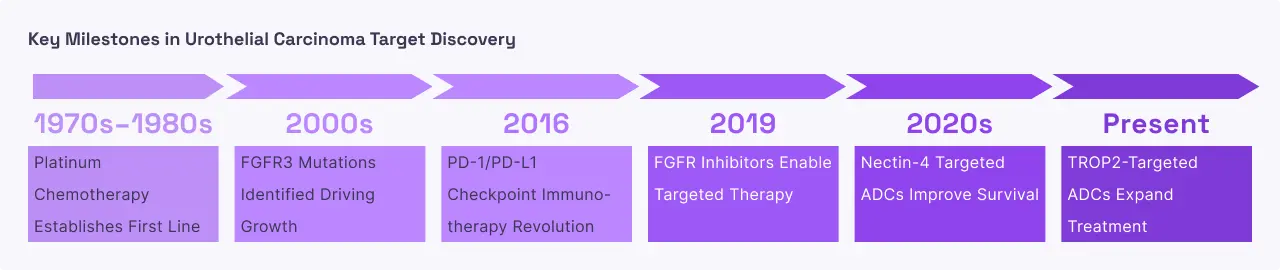
Urothelial carcinoma begins in the lining of the bladder and urinary tract. It often develops due to long-term exposure to toxins, such as those found in cigarette smoke, which trigger genetic mutations in the delicate urothelial cells. As these cells become cancerous, they overproduce Nectin-4 to strengthen their attachment to the bladder wall and to each other, forming tumors. Over time, these cells break away and use Nectin-4-related signaling pathways to invade deeper muscle layers and eventually travel through the lymphatic system to distant organs like the lungs or liver. In advanced stages, the cancer becomes highly resistant to standard platinum-based chemotherapies, as the tumor environment adapts to suppress the patient's immune response.
Why target Nectin-4 in Urothelial Carcinoma ?
Nectin-4 is an exceptional target in bladder cancer because it is expressed in nearly 97% of conventional urothelial tumors. While many cancers lose their identifying markers as they mutate, bladder cancer cells tend to keep Nectin-4 even after they have spread (metastasized) or become resistant to other drugs. By using an Antibody-Drug Conjugate (ADC) that targets Nectin-4, the treatment can bypass the shields that the cancer uses to hide from the immune system. Once the drug binds to Nectin-4, the cell swallows the entire complex, releasing a payload that destroys the cell's internal skeleton(microtubules), leading to rapid cell death. This mechanism has proven so effective that it is now used as a first-line therapy when combined with immunotherapy, replacing decades-old chemotherapy standards.
Disease:
Triple-Negative Breast Cancer (TNBC)
Prevalence:
Accounted for approximately 15-20% of the 2.3 million breast cancer cases globally in 2025
Disease Mechanism:
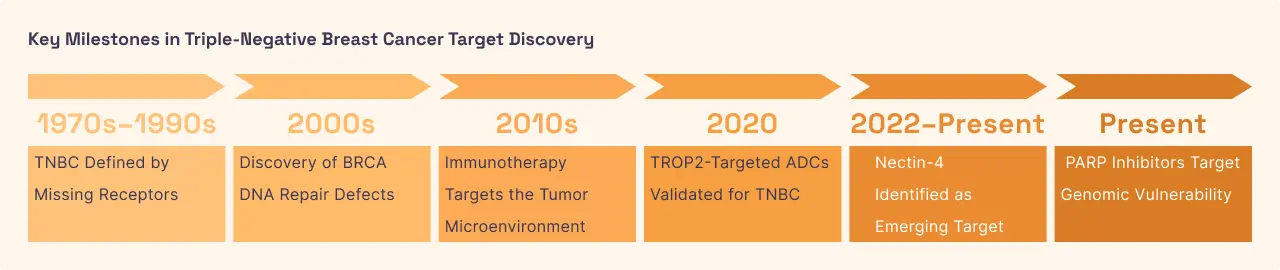
Triple-Negative Breast Cancer is a particularly aggressive form of the disease that lacks the three most common receptors(Estrogen, Progesterone, and HER2) that doctors usually target with medicine. Because it lacks these easy-to-hit targets, TNBC has historically been very difficult to treat once it spreads. In these tumors, Nectin-4 is frequently re-expressed to help the cancer cells multiply rapidly and survive in low-oxygen environments. High levels of Nectin-4 in TNBC are often a sign that the cancer is more likely to spread to the lungs or brain, as the protein assists the cells in squeezing through blood vessel walls to enter the circulation.
Why target Nectin-4 in Triple-Negative Breast Cancer?
Since TNBC lacks the "big three" targets, Nectin-4 provides a much-needed alternative "doorway" into the cancer cell. Approximately 60% of TNBC patients have tumors that are positive for Nectin-4. Using a Nectin-4-directed ADC allows doctors to deliver high doses of chemotherapy directly into the heart of the tumor without the debilitating side effects of chemo in the bloodstream. This precision is vital for TNBC patients, who often face rapid disease progression and need a therapy that works quickly to halt tumor growth before it reaches critical organs.




.svg)


.svg)
%201%20(1).svg)
%20(1).svg)
%201%20(1).svg)
.svg)
.svg)
%201.svg)


