.svg)
%201.svg)
Beyond Wet Lab: How AI is Powering the Virtual Cells for Drug Discovery
%20(1).svg)
Swapnil Chakraborty


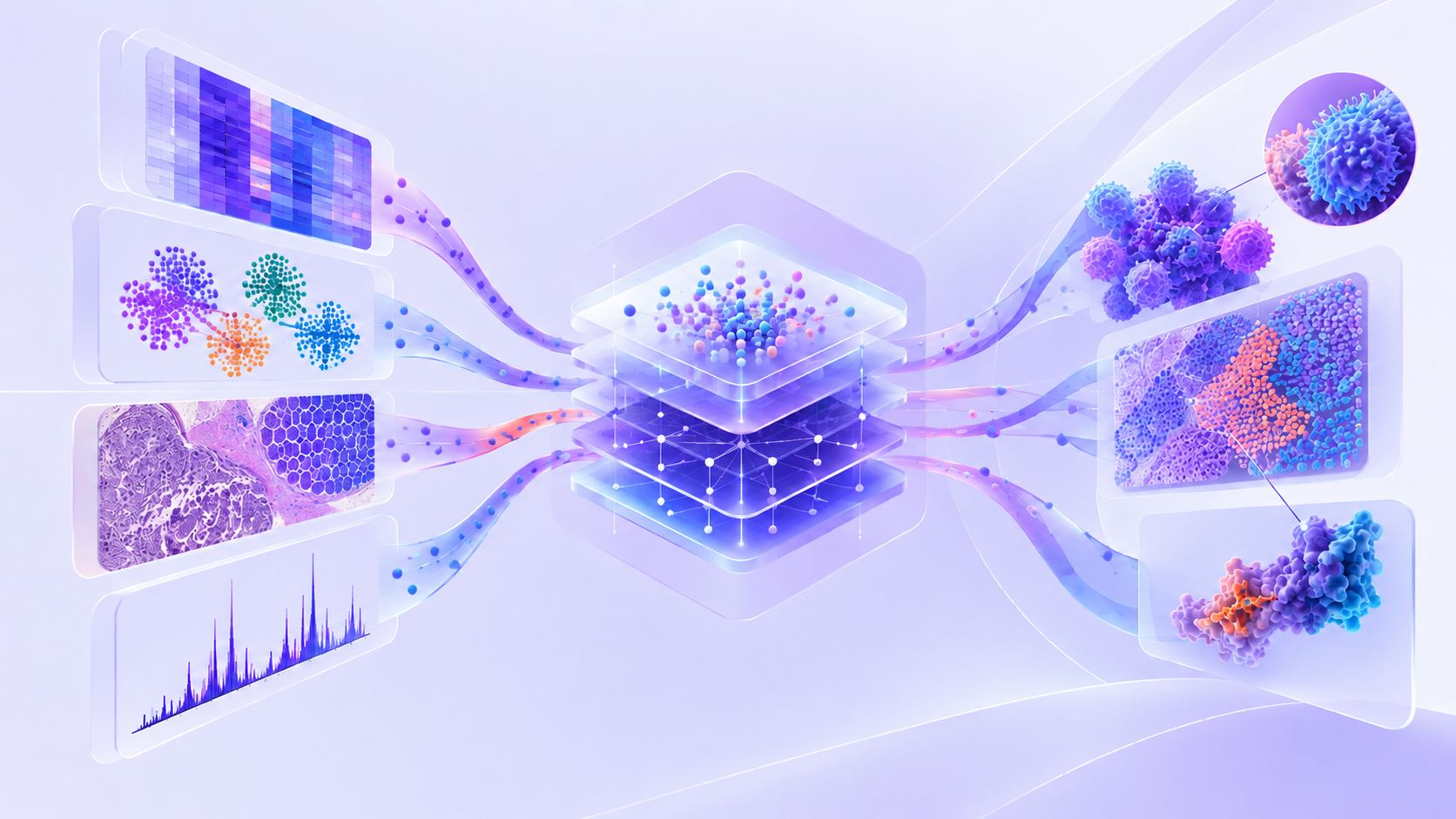
The dream of a "Virtual Cell", a complete, high-fidelity computational model capable of accurately and dynamically predicting complex cellular behavior is rapidly transitioning from conceptual theory to practical implementation. This exciting technological revolution, fundamentally powered by advanced Single-Cell Foundation Models (scFMs), is poised to reshape the entire landscape of drug discovery and personalized clinical medicine.
At Elucidata, our strategic efforts, notably our successful and focused participation in the challenging Arc Virtual Cell Challenge, rigorously demonstrated that achieving truly predictive power in these complex models hinges upon two critical and non-negotiable pillars: maintaining data quality at scale and ensuring the deep integration of biological context.
Defining the Virtual Cell and Its Therapeutic Imperative
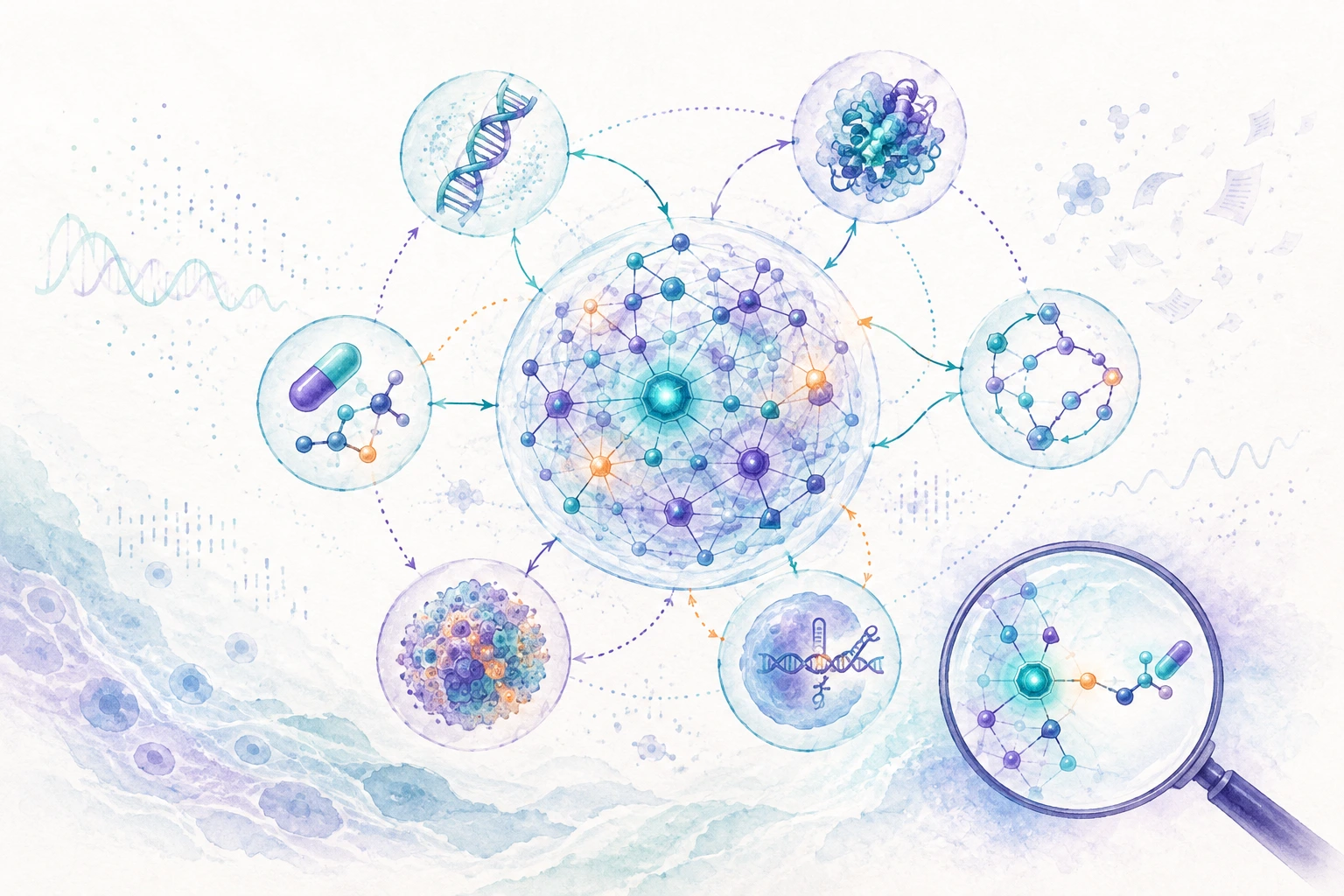
A Virtual Cell (or Artificial Intelligence Virtual Cell, AIVC) represents a highly sophisticated computational environment engineered to simulate biological systems and processes under a vast array of experimental and disease conditions.
The core therapeutic utility of the Virtual Cell is built upon its ability to Predict, Explain, and Discover (P-E-D):
The central purpose of this initiative is to shift the primary focus of biological investigation away from time-consuming, expensive, and often reductive trial-and-error experiments and toward precise, data-driven, and truly predictive simulations.
The Critical Hurdle of Context Generalization
While the deluge of data from single-cell technologies offers unparalleled resolution, the foundational challenge remains the scale of complexity and biological variability inherent in living systems. Today, the critical technical hurdle for AI is Context Generalization, the demanding requirement that a model accurately predict cellular outcomes in a context (such as a novel cell type, an unseen patient cohort, or a new disease state) that was completely unseen during its training phase.
The Arc Virtual Cell Challenge was explicitly conceived to benchmark AI models on this exact generalization task, specifically focusing on predicting the cellular response to CRISPR-mediated perturbations in an uncharacterized cell line, the H1 human embryonic stem cell line.
Elucidata’s Strategic Pillars for Building High-Fidelity scFMs
Single-Cell Foundation Models (scFMs) serve as the essential, general-purpose computational engine for powering the Virtual Cell. Our proven strategy focuses rigorously on overcoming the common limitations of conventional scFMs to ensure our derived models are robust, highly generalizable, and biologically faithful.
1. Superior Data Quality: The Imperative for Consistency and Reliability
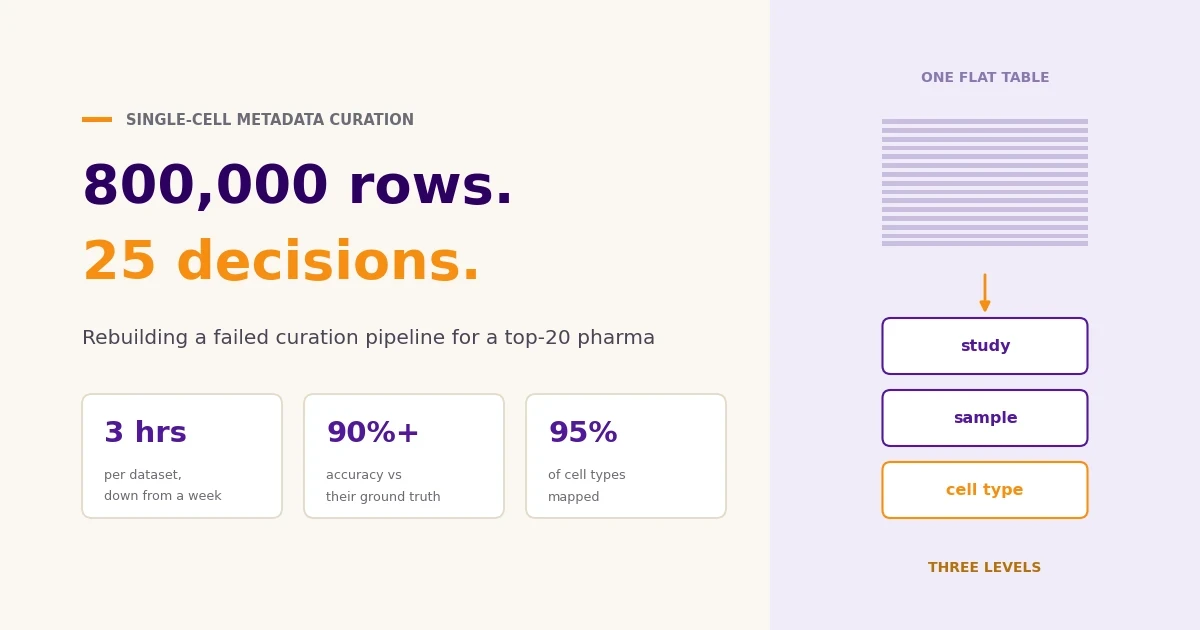
We have unequivocally established through empirical validation that the quality and consistency of training data are more critical than the sheer volume of cells for achieving high predictive performance. Standard scFMs frequently exhibit poor reliability because they are trained on data pulled from public repositories where processing pipelines are inconsistent, using different software versions, thereby introducing systemic technical noise and unreliable gene representation.
2. Generalization through Multi-Context Perturbation Modeling
Our strategy in the Arc Challenge was precisely tailored to address the demanding requirement for generalization, specifically by actively reducing the Out-of-Distribution (OOD) gap between the training data and the unseen context.
3. Biologically-Informed Feature Representation: Beyond Gene Counts
To realize a truly comprehensive Virtual Cell capable of robust P-E-D, the model must understand the intricate regulatory and mechanical architecture of the cell, transcending simple gene expression values. Standard scFMs are severely limited because they typically rely predominantly on simplistic gene count data.
The Impact: From Virtual Cells to AI Drug Discovery
Elucidata’s rigorous, results-driven approach, validated by participation in high-stakes benchmarks like the Arc Virtual Cell Challenge, is directly translating into powerful, transformative capabilities for AI drug discovery and clinical applications.
“The Virtual Cell is the technological force transforming the molecular blueprint of life into a predictable, engineered system and Elucidata is building it’s capabilities that will make this future a reality.”
References


.svg)
.svg)


%201%20(1).svg)


%201%20(1).svg)




%20(1).svg)





.svg)
%20(1).svg)


