Data Partnerships
Turn your data into usable asset for research
Elucidata partners with hospitals, biobanks, diagnostic labs and research groups. We make your consented biomedical data AI-ready, enabling its use for research efforts.













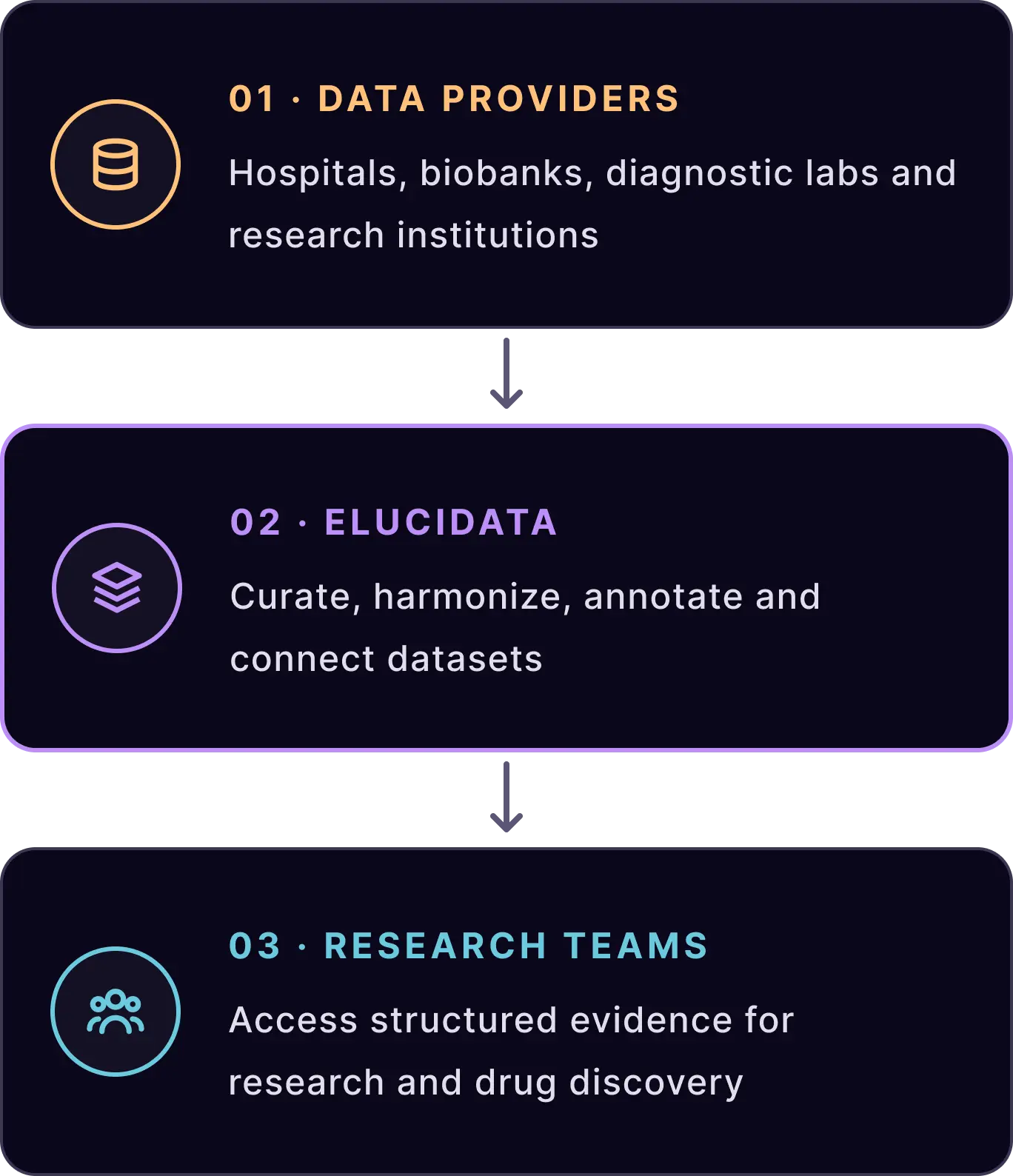
We make diverse biomedical datasets research-ready and accessible for collaborative discovery
Every partnership has a different purpose. Some partners want to advance research and publish, others want new revenue from their data, and many want both.


Consented data from diagnostics, genomics, research and clinical settings. Data from underrepresented populations, including South Asian cohorts, is in especially high demand.

Biomedical publications, scientific findings and evidence extracted from research literature.

WGS, WES, genotyping arrays and GWAS cohorts.

Bulk RNA-seq, proteomics and metabolomics.

EHRs, patient phenotypes, treatments and clinical outcomes.

Single-cell RNA-seq, CITE-seq, ATAC-seq and spatial transcriptomics.

Whole-slide imaging and radiology data.

Diagnostic panel testing, laboratory results and screening data.
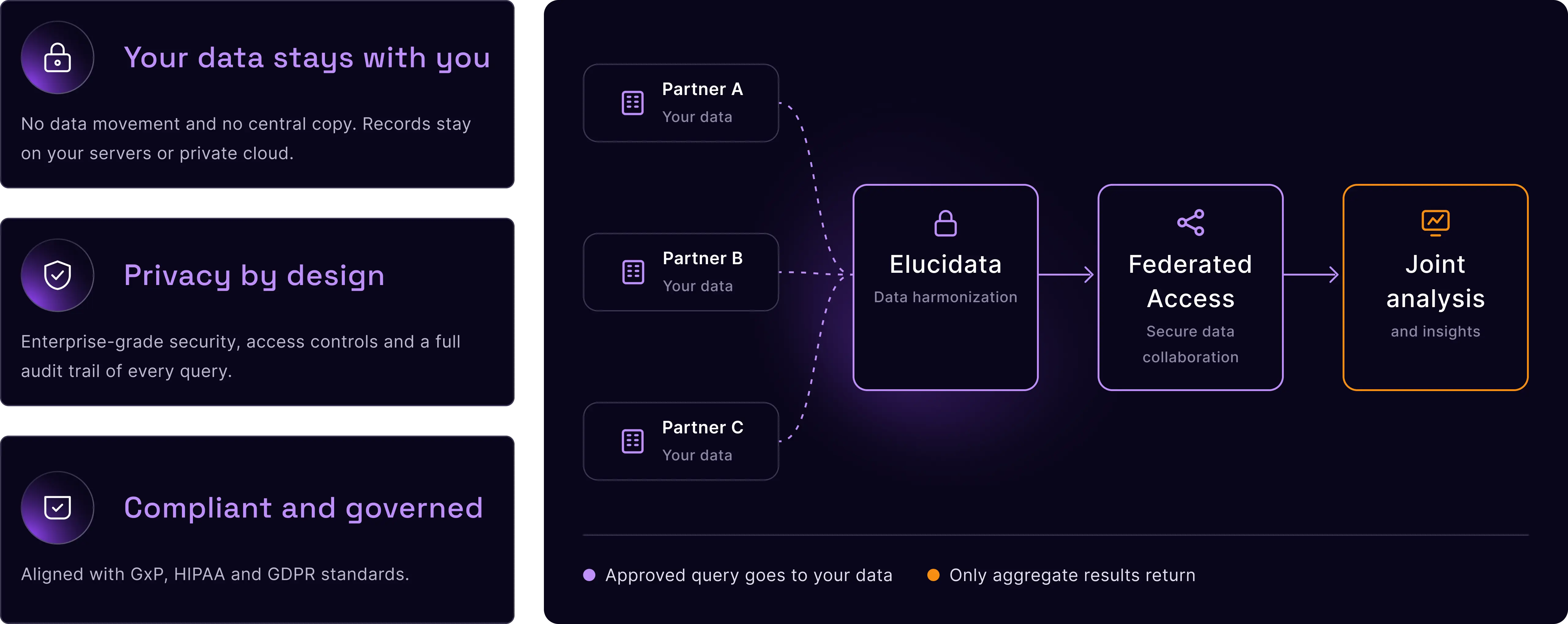
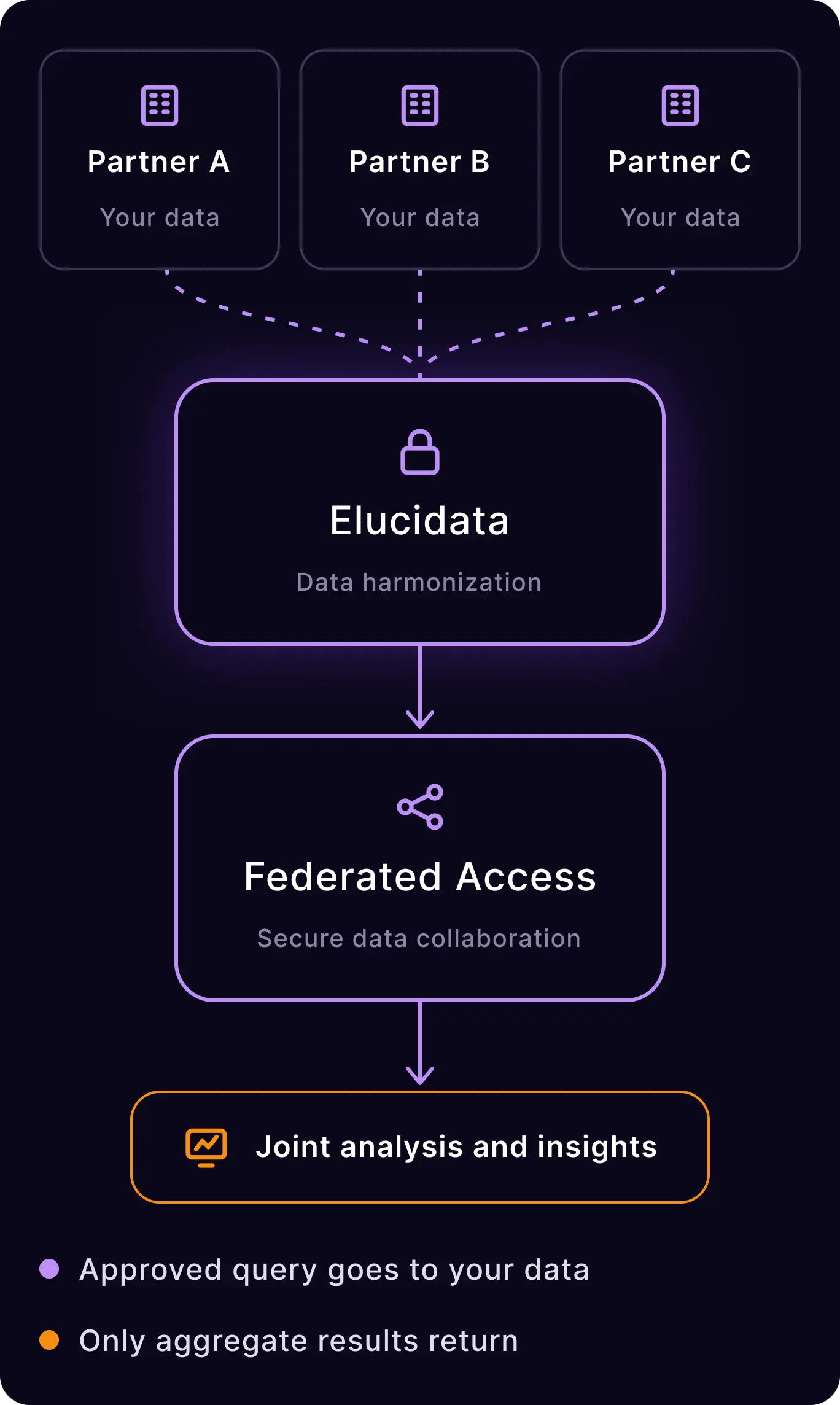
Federated access sends the analysis to your data, so the data itself never has to move.
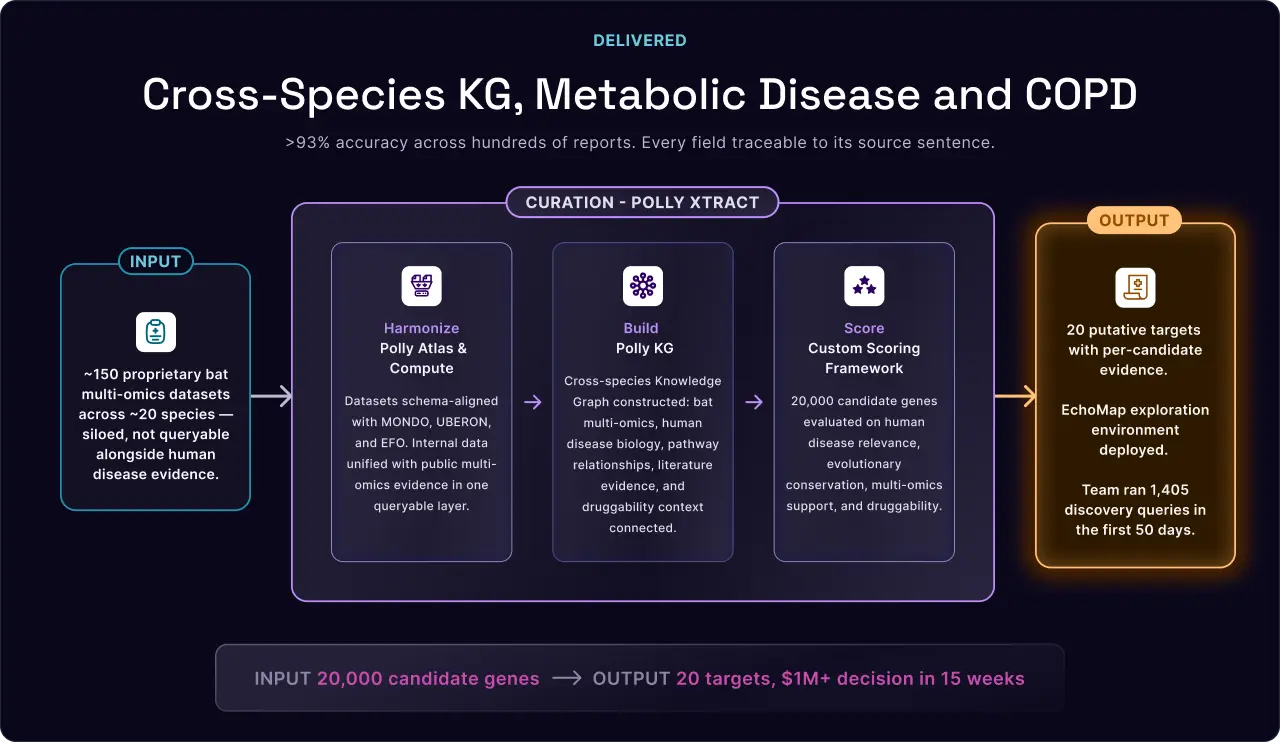

Explore research, insights and examples of how diverse biomedical datasets can contribute to drug discovery.
Tell us about your data and your goals. The Data Partnerships team will reply within 2 working days.
Prefer Email?

You do. A partnership gives Elucidata the right to use your data only in the ways you agree to upfront, such as integration into its products, a joint study or model development. Ownership never transfers, and any new use needs your approval.
Yes. Co-research and publication partnerships run without licensing or revenue terms. Your team and Elucidata scientists study your cohorts together and publish the results. If commercial use makes sense later, it can be added on separate terms.
Yes. The program is open to universities, research institutes and government bodies, through co-research, publications or AI model development. Elucidata handles the harmonization and analysis, so you can take part without data engineering resources of your own.
Your data must have been collected with participant consent that covers research use. Elucidata reviews the consent scope and ethics approvals with you before any work begins.


