In 2015, Bristol Myers Squibb paid $800 million upfront for Flexus Biosciences, whose lead drug had never been given to a patient. The target was IDO1, an enzyme that tumors and tumor-associated macrophages use to suppress the immune system; in mice, especially alongside checkpoint inhibitors, the results were striking. Three years later, the field’s leading IDO1 drug, Incyte’s epacadostat, a rival to BMS’s own, reached its verdict. In a Phase 3 trial with Merck’s pembrolizumab in more than 700 melanoma patients, it added no benefit.
The mouse said ‘yes’. The patients in a well-controlled Phase 3 trial said no’.
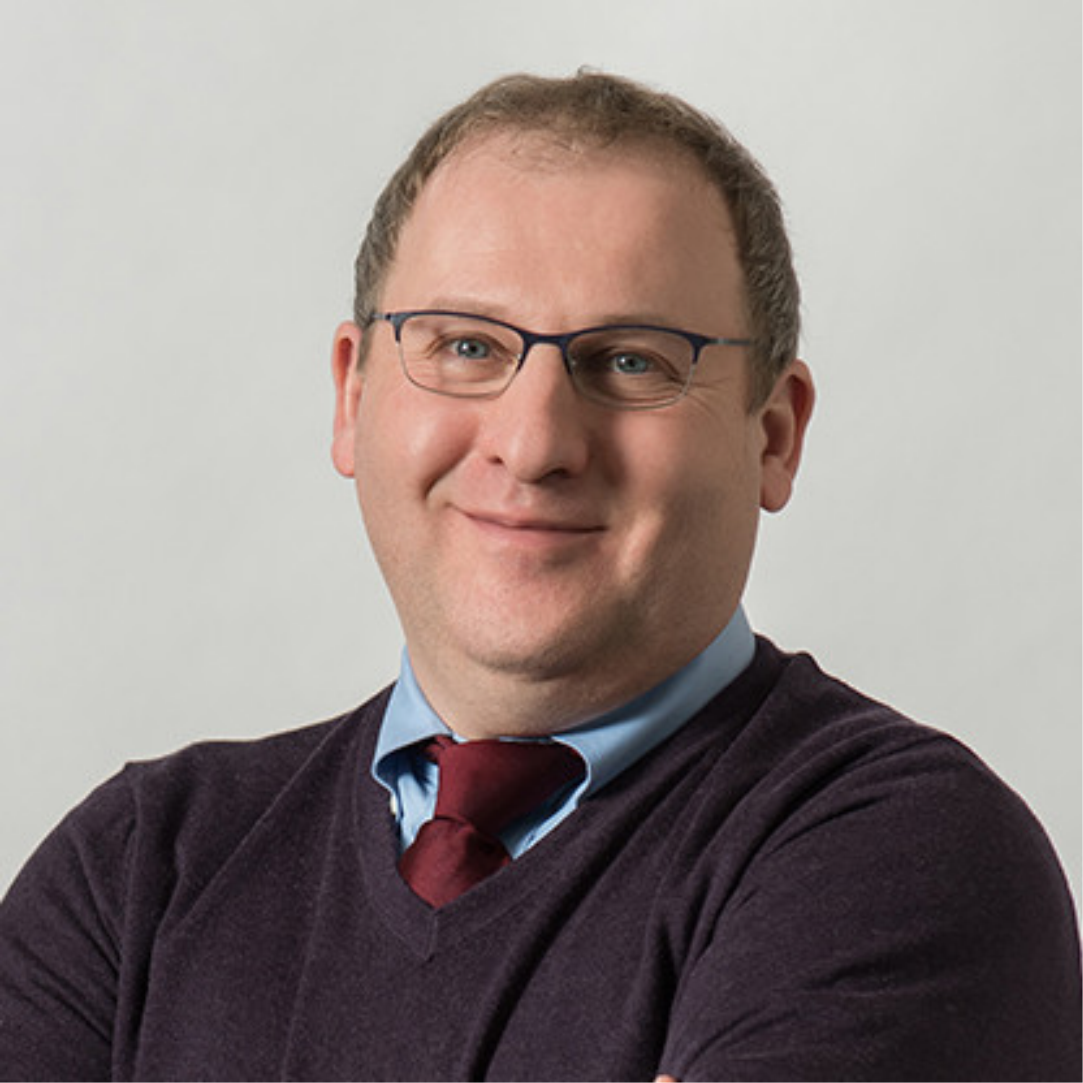
Igor Feldman, VP of Target Discovery and Translation at Elucidata, watched that failure from inside the field. It confirmed a conviction he had carried since his early days at Merck. There, an immune signature buried in omics data from thousands of human tumors was dismissed as contamination, until it turned out to predict which patients survived. The perceived noise in the data turned out to be a signal, and human outcomes proved it.
Over two decades, Igor has learned to rank evidence by one question: how close does it sit to the patient? Here, he explains why the clinic is the ultimate model, why mouse efficacy alone is insufficient in a target’s case, and why clinical translation in general is the main challenge in drug development.
That way of thinking started early. Igor trained in systems biology at Columbia University, where his PhD mapped how essential genes and disease genes sit within networks of interacting human proteins. The habit it left him with has never faded: “I rarely think one gene at a time, one target at a time.” His career has since run through Rosetta Inpharmatics at Merck, Jounce Therapeutics, Epizyme, Verseau Therapeutics, which he co-founded to target macrophages in cancer, and Moderna, before he joined Elucidata.
Rosetta Inpharmatics, part of Merck when Igor joined, was built on an idea that was far from obvious at the time: that biology could become an information science. Through a collaboration with Moffitt Cancer Center, the group assembled a patient tumor dataset with clinical records attached, years before TCGA data became public. By his account it covered ~17,000 tumors, more than the roughly 11,000 that TCGA holds today.
The samples were prepared with unusual care. Each tumor was nanodissected to at least 90% tumor purity, a step meant to strip away stroma and lymph node tissue so that every signal could be traced to the cancer itself.
When the team searched for the largest patterns running across all 17,000 tumors, the first two were exactly what a cancer biologist would expect. Proliferation came first. Epithelial-to-mesenchymal transition, the program that lets cancer cells loosen and spread, came second. The third was an immune signature, and nobody had a ready explanation for it.
The biologists had one. The ‘immune contamination’ came from the Immune cells from lymph nodes, they argued, which slipped into the samples, and a tumor labeled nanodissected is not always as clean as the label claims. It was a reasonable objection, and no amount of re-analyzing the same expression data could rule it out.
What settled it was evidence from outside the dataset. When the team checked the signature against patient outcomes, tumors carrying it, later known as ‘hot’ tumors, were linked to longer survival. Hot melanomas outlived cold ones, and the same held in triple-negative breast cancer. “Contamination of sampling cannot explain correlation with survival,” Igor says.
Convincing the team and the field has been a long process But the episode left him with a rule he has applied ever since: a pattern in the data earns belief when it tracks with what happens to patients.
Then PD-1 inhibitors arrived. Early signs that Bristol Myers Squibb’s antibody, nivolumab, was producing striking results in melanoma caught Merck’s attention. Merck had its own anti-PD-1 antibody, pembrolizumab, sitting largely unused after its merger with Schering-Plough. Within a short time the company reorganized around it, and a small oncology franchise became one of the largest in the world on the strength of a single drug.
The idea itself was not Merck’s. Checkpoint blockade grew out of Jim Allison’s and Tasuku Honjo’s work, which was later recognized with a Nobel Prize in Medicine, and antibody programs later owned by BMS, developed with Jedd Wolchok at Memorial Sloan Kettering. Immune oncology was a paradigm shift that took the field of cancer drug discovery by storm.
For target discovery, the shift exposed a deeper problem. Oncology had spent the previous years maturing around a clear logic: find the mutation driving a tumor, such as HER2 amplification in breast cancer or EGFR mutation in lung cancer, then target it. Those mechanisms could be tested in cell lines and in mice carrying tumors taken from patients. The models were imperfect, but they were somewhat predictive.
Immuno-oncology broke that logic twice. First, it broke the models. Mice carrying human tumors lack a working immune system, so they cannot show whether an immune drug works. The field turned to syngeneic models, mouse tumors grown in mice with intact immune systems, and, in his views, these proved even less translatable than the models they replaced; and to humanized mouse models, that were engrafted with both human tumors and the immune system, but were very expensive and had a lot of donor-to-donor variability
Second, it broke the mechanism. Classic targeted therapy goes after what drives the cancer. Immuno-oncology goes after a healthy immune system and relies on it to turn on the tumor, and predicting which lever will actually stop a tumor is far harder. “We got somewhat lucky with the first two targets,” Igor says of CTLA-4 and PD-1. The checkpoints that followed, LAG-3 and TIM-3 among them, produced far fewer successes, and no one has fully explained why some translate and others do not.
In his view, neither problem has been solved. Syngeneic models have repeatedly failed to predict what happens in patients, yet teams still use them, because nothing more convenient exists and everyone wants to see at least some early evidence of efficacy before the clinic.
At Jounce Therapeutics, co-founded by Jim Allison among other leaders of immuno-oncology, Igor joined as head of computational biology within the translational group. While the field focused on T cells, he went back to TCGA and looked at what else the data held.
He found a set of strikingly stable patterns pointing to myeloid cells: tumor-associated macrophages, myeloid-derived suppressor cells and other populations that hold the immune response back. Three observations persuaded him they mattered. Every hot tumor also carried these suppressive cells, which made sense, since a tumor without them would likely be cleared before it ever became clinical disease. Most tumors had the myeloid cells and no cytotoxic T cell activity at all. And the signature looked the same in tumor types as diverse as breast cancer, lung cancer and glioblastoma.
The third observation carried the most weight. Every tissue has its own resident macrophages, and they differ from organ to organ. A signature that stayed constant across cancers had to be capturing tumor-related biology rather than tissue-related biology. Then came the test that had settled the hot tumor debate years earlier. This signature also tracked with survival, this time with poor survival.
The biology, as he describes it, comes down to a chain of command. “The cytotoxic T cells are the soldiers. They just go and kill. But the license to kill is given by macrophages.” In tumors, those generals were ordering the soldiers to stand down. The question became how to make cancer-serving generals serve the patients.
He carried that question into Verseau Therapeutics, which he co-founded to target myeloid cells in the human tumor microenvironment. Its case rested on human tumors and patient survival. What it has not yet had is a full clinical test. As immuno-oncology failures accumulated, early enthusiasm gave way to what he calls a winter, and novel mechanisms became harder to bring to patients. IDO1 was among those failures, and it was itself a myeloid target, though a different class from the macrophage checkpoints Igor was pursuing. “Those were very painful failures for the field,” he says.
Igor has worked alongside clinical teams for much of his career, at Merck, at Epizyme and at Verseau, where the lead program went from an idea to IND clearance by early 2022 with a clinical plan, a biomarker strategy and drug product ready. That work shaped how he thinks about what a clinical trial really is.
“The clinical trial is a human experiment,” he says. It is an unusual one. There are no replicates, and no way to give the same person two drugs and see which works better. A Phase 3 trial enrolls many patients but is tightly controlled and collects relatively little data. A Phase 2 trial gathers more, on smaller cohorts that must be compared with one another.
The challenge is the same as in the lab: determining whether a finding is real. But clinical outcomes carry more weight.
“Unlike many other fields, in drug discovery there is an ultimate model. It is humans,” he says. “It does not matter that mice are cured if people are not. And if people are cured and mice are not, the latter fact does not matter.”
In his view, that is the lesson of IDO1. Mouse efficacy is where a target’s case is easiest to build and easiest to get wrong.
If the clinic is the final judge, the work before it should look as much like the clinic as possible. Igor sees two ways to get closer.
The first is models that sit nearer to the patient. At Verseau, the team worked with tumor slice cultures: live tumors taken straight from the operating room, sliced and exposed to different drugs. In his experience these translate far better than current in vivo models. Mice with humanized immune systems also show promise, but they are expensive, difficult to run and within reach of only a few groups.
The second is a different relationship with data. For a while, more data meant more power. “Now it feels that we have so much data we do not know what to do,” he says. His answer is to think biologically. Instead of feeding everything into an algorithm and waiting for an output, he wants scientists to experiment in silico the way they would at the bench: one hypothesis at a time, asking what each pattern means mechanistically and biologically, and whether it could hold up in people.
Better models and biologically driven analysis are, in his view, the two biggest hurdles standing between immuno-oncology and “its second shot at the goal.”
For Igor, the result that matters most is read off a Kaplan-Meier curve, the survival plot every oncology trial produces. For most of cancer history, a drug that could not cure did the next best thing: it shifted that curve. Trials reported that patients lived six months longer on average, or a year. Jim Allison, whose work was foundational to ideas of checkpoint blockade and the immune oncology revolution, argued that this was the wrong measure of success. The goal was to raise the tail of the curve, the share of patients still alive five or 10 years after treatment. A drug that leaves 5% of patients alive at that point falls short of that goal.. One that lifts the figure to 20% is starting to cure people.
That is what checkpoint trials showed at their best. The question stopped only being about how many patients responded, because many who responded stayed in remission for years. People treated for metastatic melanoma a decade ago are still alive. Igor points to Mary Elizabeth Williams, a journalist who entered an early checkpoint trial at Memorial Sloan Kettering with stage four melanoma and months to live. She is still alive and thriving. Today’s drugs have lifted the tail only partway, and lifting it further is what he hopes the next generation will do. “I am all for curing diseases, not just treating them,” he says.
Asked what target discovery will look like in 10 years, he sets aside the expected answer about abundant data and powerful AI. Tools that connect existing evidence will help, and he points to Elucidata’s knowledge graph work as one way to surface hidden jewels already sitting in the data. But the path to a drug will run through the same steps: find the right mechanism, build a good molecule against it, then design a clinical trial that shows it works. “It is actually back to basics, but doing it in a deliberate, good and slow way.”
Understanding why a drug works was a foundational principle of his career. “If there is some black box pipeline where you feed data in and get drugs out, and they just work in the clinic, I do not foresee this happening.” Patients in a trial tell a team whether a target works. Mechanism tells them why, and that understanding is what lets them design the next trial with confidence.
The mouse can make the case for a target. Only the patient can settle it.
Written by Arushi Batra, PhD, based on a conversation with Igor Feldman as part of Elucidata’s leadership series on drug and target discovery. The views expressed are Igor’s own, and references to former employers are based on public information and personal recollections.


