
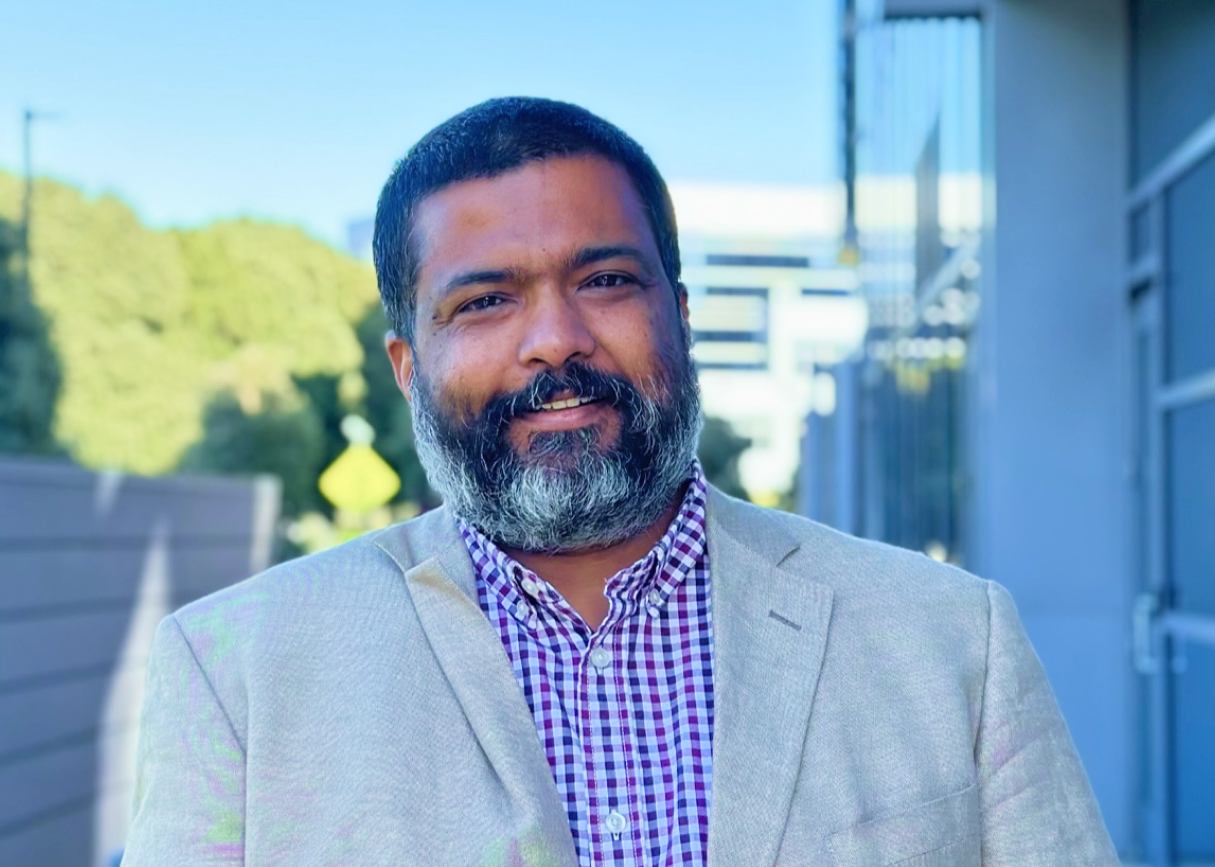
I’m Abhishek Jha, AJ to most people. I’m one of the co-founders and the CEO of Elucidata.
Before this chapter, I spent six and a half years at Agios, a small but ambitious biotech in Cambridge, working on AML and rare diseases. I was fortunate to be part of the team that built the data platform and helped bring four first-in-class drugs to the clinic. It was an incredible run, equal parts learning and impact.
Before Agios, I trained as a computational biologist at MIT and the University of Chicago.
Somewhere along the way, I realized the biggest bottleneck in science wasn’t talent or tools. It was data that wasn’t ready for either.
Ten years ago, this realization led to Elucidata.
This month, as we mark a decade of building, breaking, and rebuilding systems for better biomedical data, I’m reflecting on a recent moment, one that quietly reshaped how I think about AI, human judgment, and the problems we’ve been solving all along.
If you're building AI systems in healthcare or wrestling with what “real-world impact” actually looks like in R&D, I hope this story resonates.
There are rare, singular moments when your stance on a deeply familiar problem quietly but decisively shifts.
For me, that moment came during our recent all-hands.
Six years of work, distilled into a 15-minute demo. Not flashy. Not hype-driven. Just… right.
It reflected judgment. It showed restraint. And above all, it respected the messiness of science.
Over the last six years, we at Elucidata have been obsessed with metadata curation.
It is a core element of our thesis of data-centric AI.
Now metadata curation is not the glamorous kind of problem.
It is tedious, critical to solve and very high-friction kind. It sits inside supplementary tables, PDFs, websites, PPTs and forgotten assay files.
We threw everything at it: manual playbooks, BERT, active learning, LLMs.
And we made progress.
Each wave helped us scale, helped us structure.
We had a handle on the problem but it never quite felt like we had cracked it.
Then came the demo in the all hands.
Built by our own team, the demo was for our own team. It didn’t scream for attention. But in 15 minutes, it distilled six years of work into a system that… worked.
Not just technically. Philosophically.
Back in 2019–21, we began with spreadsheets and rule-based models. Every automation attempt hit a ceiling, 75–80% accuracy, high maintenance costs, one BERT model per metadata field.
LLMs looked promising. But production ready workflow to curate metadata at human level accuracy seemed distant.
So we went deeper...
Early in 2025, we doubled down on a multi agentic solution to the 6 year old problem!
Each AI agent focused on a distinct cognitive task: search, extraction, reasoning, validation. Together, they mirrored the workflows of our best human curators, accrued over many years.
That’s what I saw that day.
And for the first time,
"I changed my mind, not about whether AI and humans should collaborate, but how."
We tested the system with a diagnostics partner on a real-world use case: 400 patient records, where cummulatively 600 fields had been manually extracted.
It was the “gold standard” against which our agentic solution was going to be compared.
Initial accuracy? 80%.
But when our human curators reviewed the differences, they found that 116 times out of 120 identified discrepancies, the model was correct and the “gold standard” was not.
Our agents were out performing humans when it came to one metric that mattered the most: accuracy.
Later, the VP Data Engineering at our partner company said something that stayed with me:
“I didn’t think an agentic system could deliver this level of quality. But now, I can’t unsee it.”
6 Years. 30 Curators. 1 Problem Statement.
This breakthrough didn’t come from a clever prompt or a lucky fine-tune.
It wasn’t just the architecture. Or the agents. Or the stack.
It was the 100+ person-years of context our team had accumulated.
Thirty curators. Hundreds of datasets every month.
Thousands of judgment calls made and revisited and refined. That experience was encoded, not just in the output, but in the very design of the system.
That’s what trained our agents. That’s why this works.
Because it was built on top of human expertise.
This system isn’t about replacing human curators. But it does change what human excellence looks like!
Our curators no longer spend hours making repetitive decisions.
They’re reviewers. Validators. Teachers.
They push back when the model is wrong.
They shape the AI through smart interventions.
They decide when nuance matters.
And they’re still the reason we can trust the result.
This wasn’t just a tech milestone.
It was a mindset shift.
One where human experience doesn’t just coexist with AI, it enables it.
One where models don’t replace decision-making they mirror the journey it took to make those decisions.
This system wasn’t imagined in a vacuum.
It was built by our team, for a problem we’ve lived for years.
And I’ll say this plainly: without those human curators, this AI system wouldn’t be half as accurate.
Why are we able to do this as well as we claim?
Because six years of experience, across thousands of datasets and edge cases, was encoded into the system.
That depth is our secret.
And if this agentic system has to stay cutting-edge six or twelve months from now,
we’ll still need those same curators: refining, reviewing, and teaching the model where judgment matters.
This shift changes how humans work too.
Some will lean back. Trust the model blindly. Stop thinking critically.
They’ll struggle.
But the ones who thrive?
They’ll be the ones who challenge the model.
Who teach it through smart interventions.
Who know when to trust, when to override, and when to ask the better question.
That’s the loop we’re designing for.
Not AI alone. Not humans alone.
But AI and human, in active collaboration, each making the other better.
That’s what wins!
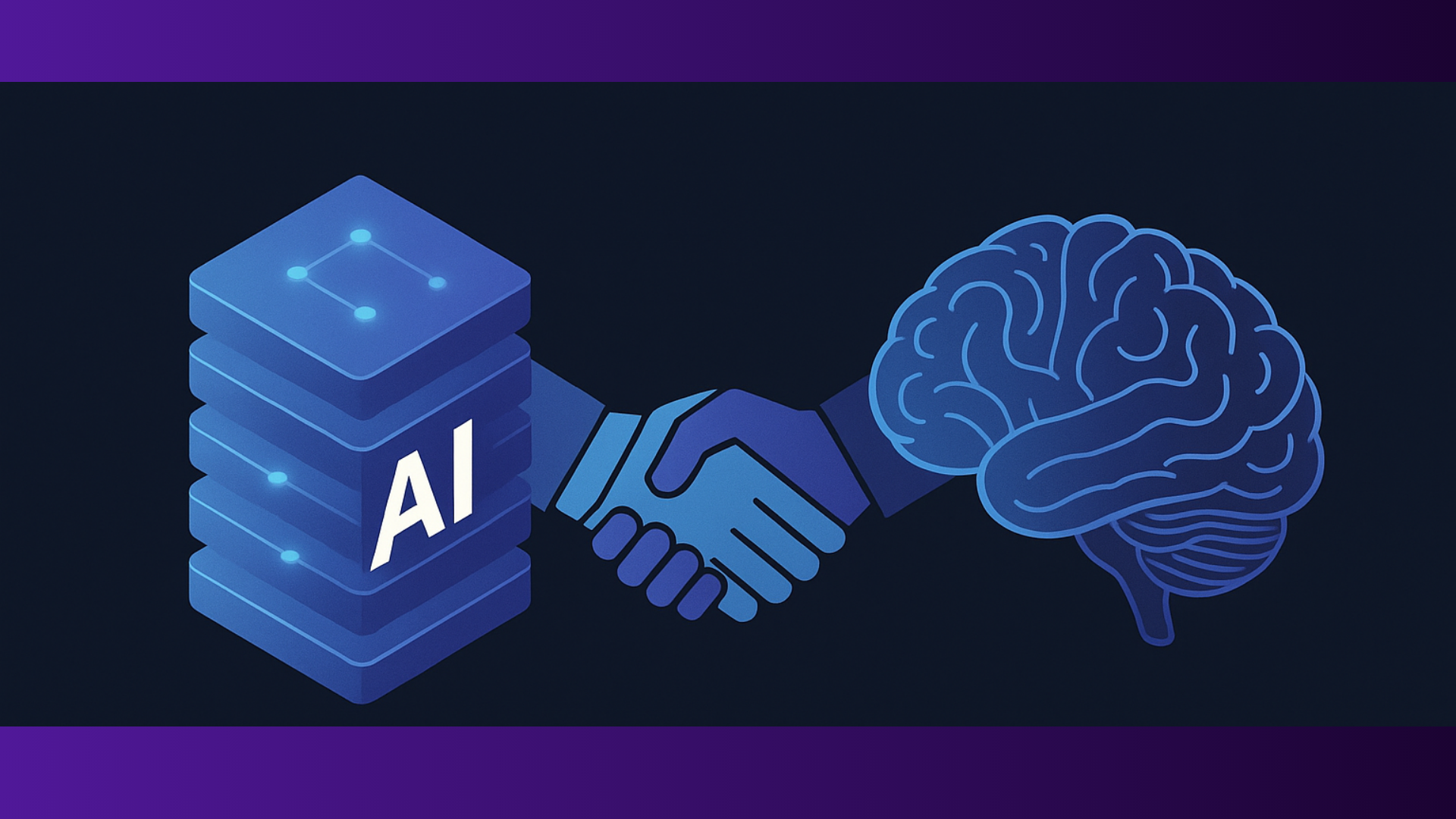
As Elucidata turns 10 in a few days, I find myself reflecting not just on what we've built, but how we've built it.
With stubborn curiosity.
With deep respect for the science.
And with the belief that progress in R&D doesn’t come from models alone, but from systems designed to think with scientists, not just for them.
That belief has carried us through a decade of challenges and breakthroughs.
And it’s what gives me confidence that the next chapter, powered by agents, sharpened by human judgment, and grounded in real data, will take us even further.
We’re not building tools for a hypothetical future.
We’re building what the next decade of R&D will depend on.
And we’re just getting started!
Abhishek Jha | Co-Founder & CEOElucidata
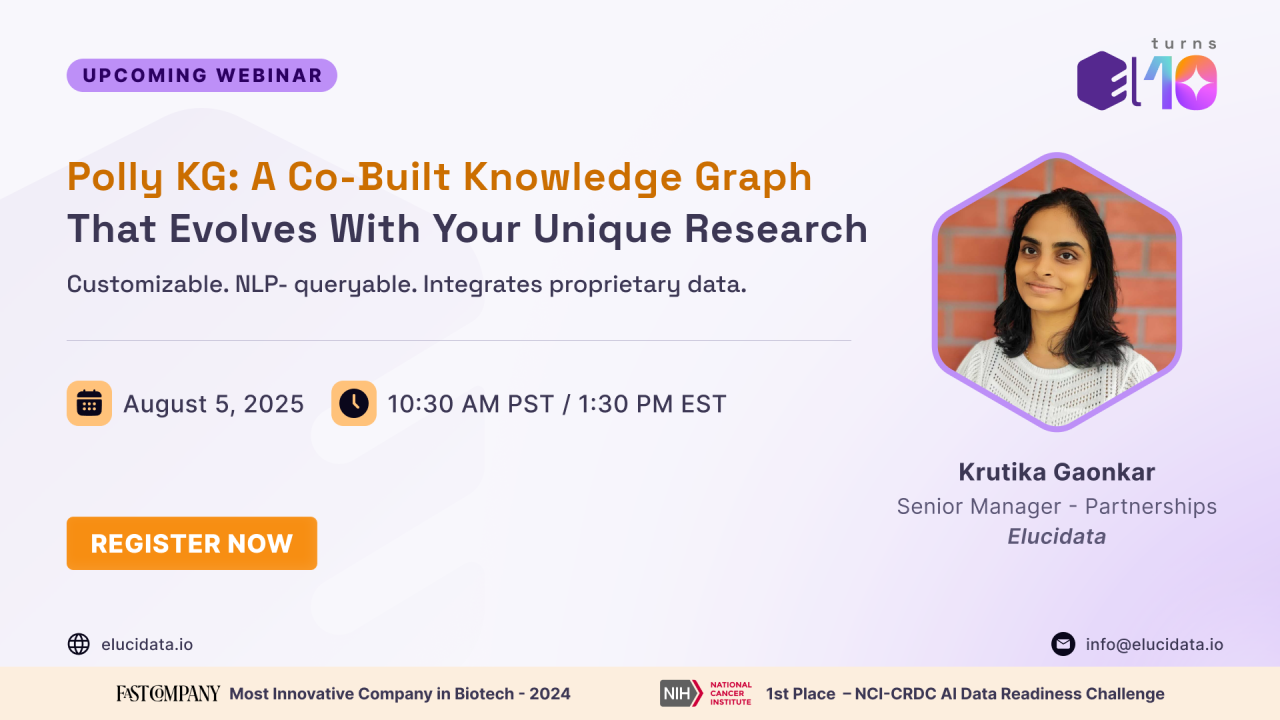
Polly KG -A Co-Built Knowledge Graph That Evolves With Your Unique Research
August 5, 2025
Join us on 5 August 2025, to see how Polly KG goes beyond static schemas and surface-level Natural Language processing to deliver answers your team can trust.Register now.


Thank you for taking the time to explore our updates!
We’d love to hear your thoughts or help you discover how Elucidata can support your goals, feel free to share feedback or talk to our data expert.
P.S.: For more insights, updates, and upcoming events: follow us on LinkedIn and join the conversation!
Warmly, AJ(Abhishek Jha)
.svg)
%201.svg)